Ostara

Saturday, December 13, 2025

Christmas - That Pagan Hoilday


Because of its known pagan origin, Christmas was banned by the Puritans and its observance was illegal in Massachusetts between 1659 and 1681.  But somehow, Christmas was and still is celebrated by most Christians.

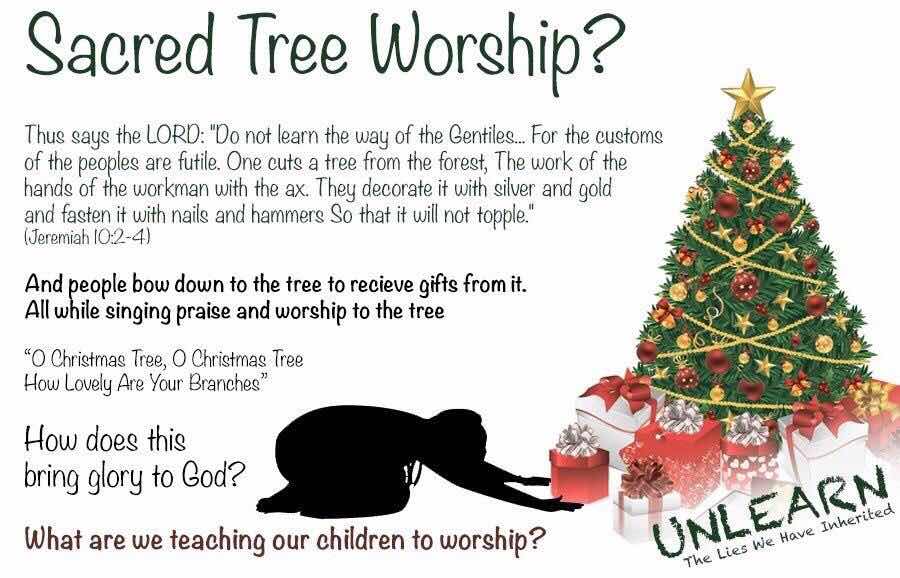
And even though the Christmas tree is Pagan, there seems to be some confusion.


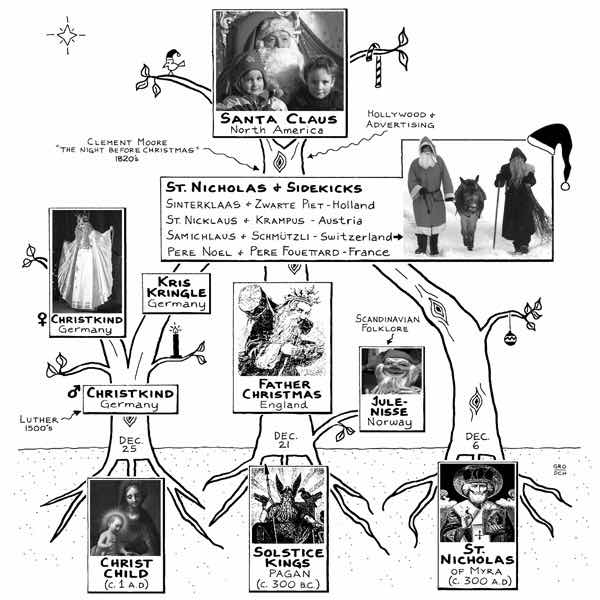
The Many Faces of Santa Claus


Santa Claus will soon be coming to town, bringing gifts to children everywhere.

Santa has several names, depending on the part of the world you live in. 

The English call him Father Christmas, the French know him as Père Noël, and Kris Kringle seems be a version of the Christkind, or Christ Child, who leaves treats for good German Lutherans.


In the Netherlands, he arrives in town on a steamboat or horse from Spain. On the night of Dec. 5, Dutch children put their shoes on the hearth – these days near the central heating duct – hoping that he will fill them with sweet rewards rather than a reprimand for poor behavior. 

The Dutch call him Sinterklaas – which has come into American English as ‘Santa Claus’ – short for Sint Nicolaas or St. Nicholas .

St. Nicholas and Santa Claus are historically the same man. 

But unlike the jolly figure who purportedly flies on a sleigh from the North Pole, the saint came originally from the balmy Mediterranean coast.


Hope that clears everything up.


Friday, December 12, 2025

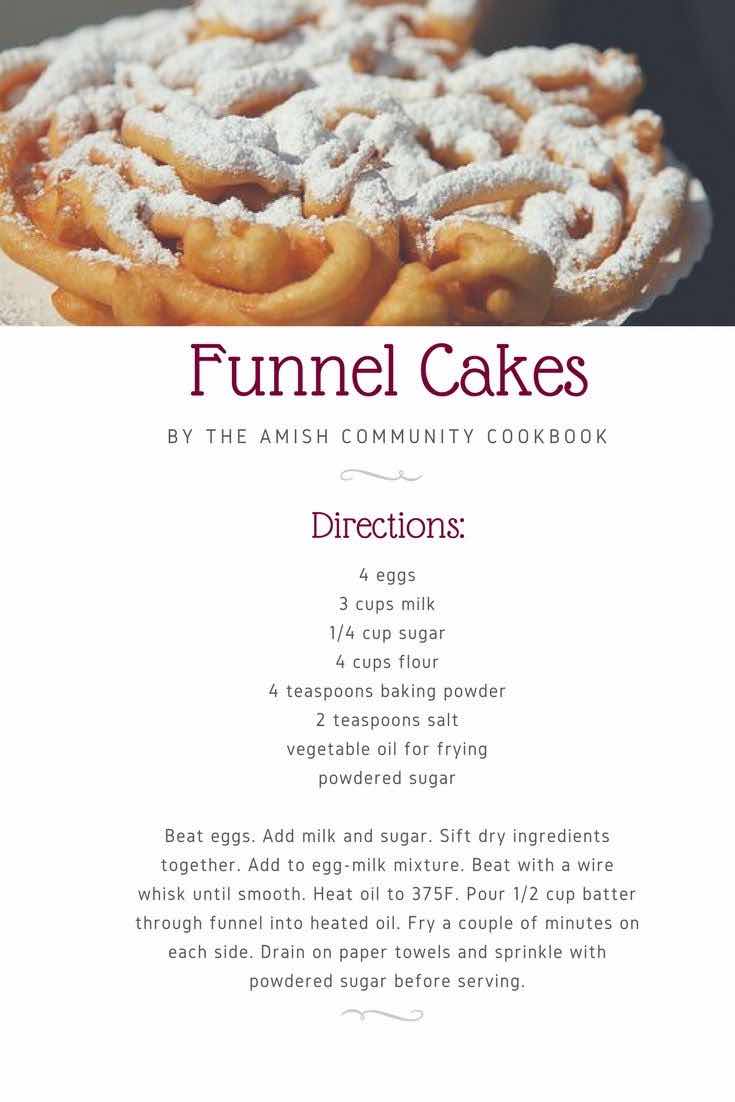
Funnel Cakes


Funnel cakes made their first appearance in Anglo-Norman medieval cooking manuscripts under the name “mincebek” or sometimes “mistembec” or “cryspes.” 

These words come from France; the French phrase “mis en bec” means “put in spout,” which relates to the way funnel cakes are made.

In the beginning, funnel cakes, or fritters, were made by pouring yeast or sourdough batter into a bowl with a tiny hole in the bottom. 

The finished cakes were sprinkled with salt and served with syrup.

During the 19th century, funnel cakes were sold as a novelty during Christmas and New Year’s, mostly at church fairs and holiday markets.


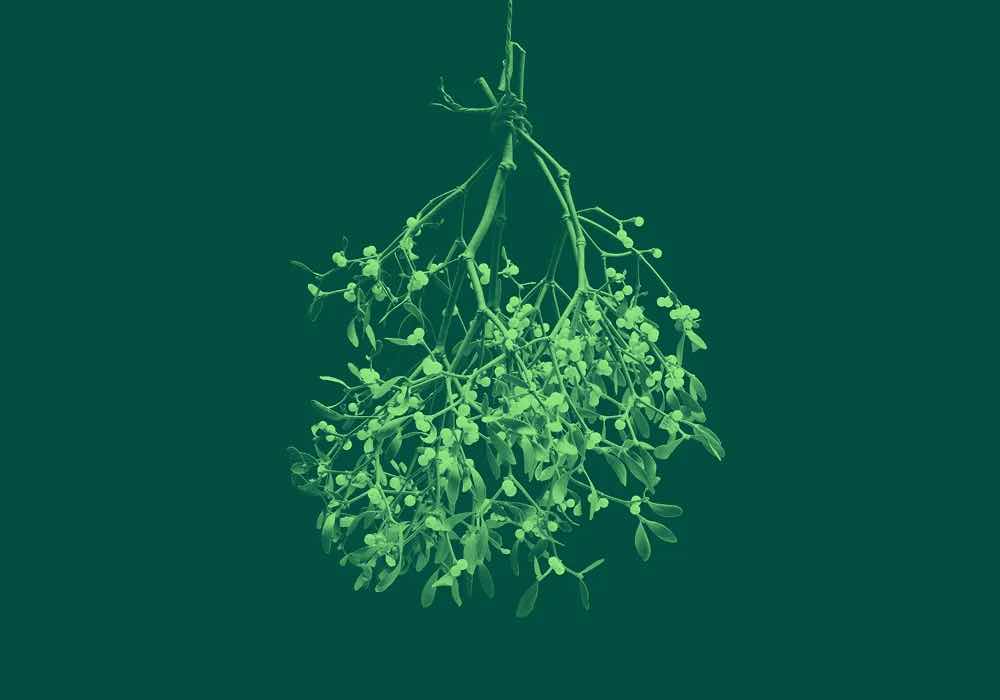
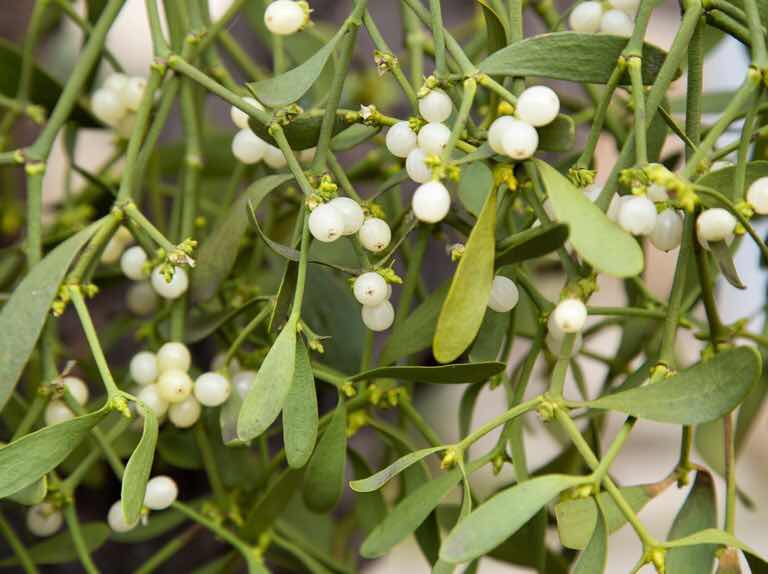
The Tradition of Mistletoe at Christmas


Mistletoe is a plant that grows on an assortment of trees including willow, apple and oak trees

The tradition of hanging it in the house dates back to the times of the ancient Druids


It is supposed to possess mystical powers which bring good luck to the household and wards off evil spirits. 

It was also used as a sign of love and friendship in Norse mythology.


When the first Christians came to Western Europe, some tried to ban the use of Mistletoe as a decoration in Churches, but many ignored the ban and continued to use it! 


York Minster Church in the UK used to hold a special Mistletoe Service in the winter, where mistletoe users in the city of York could come and be pardoned.


The custom of kissing under Mistletoe comes from England. 

The earliest recorded date mentioning kissing under the mistletoe is in 1784 in a musical. 


There was kissing under the mistletoe in the illustrations in the first book version of 'A Christmas Carol' published in 1843, and this might have helped the idea of kissing under the mistletoe. 


The original custom was that a berry was picked from the sprig of Mistletoe before the person could be kissed and when all the berries had gone, there could be no more kissing.


The name mistletoe comes from two Anglo Saxon words 'Mistel' (which means dung) and 'tan' (which means) twig or stick! So you could translate Mistletoe as 'poo on a stick'.