Mabon

Monday, August 24, 2026

The Months, the Moon and the Sun


The word “Month” comes from the word “Moon” 


Throughout history, people have used different types of calendars to help them know when to plant crops, choose the best hunting times, plan meetings and observe religious holidays. 


All calendars work by making it possible for you to organize time units by observing astronomical cycles. Months are based on the moon's orbit around the Earth, years are based Earth's orbit around the sun and days depend on how fast the Earth revolves around its axis.


Solar Calendars and the Sun

Solar calendars, such as the Gregorian calendar, track time using tropical years. 

A tropical year, also called a solar year, is the length of time between two vernal equinoxes. 

That time period is 365 days, five hours, 48 minutes and 46 seconds. 

Many people refer to a vernal equinox is the first day of spring. 

There is no U.S. law that forces people to observe Gregorian solar calendar dates. 

The use of that calendar dates back to 1751 when the United Kingdom told its colonies to use the Gregorian calendar.


Lunar Phases and New Moons

A new moon is the opposite of a full moon. 

As the moon orbits the Earth, its position relative to the Earth and sun changes, and the moon appears to go through phases. 

When the Earth sits between the moon and sun, people on Earth see a full moon at night. 

A new moon occurs when the moon sits between the sun and the Earth. 

New moons occur during the day, so you can't see them because of the sun's brightness. 

A quarter moon, on the other hand, occurs when the moon completes 25 percent of its orbit around this planet.


Lunar Calendars

Because the moon circles the Earth in the same time it takes to rotate once, the moon always shows one face to the Earth. That's why you never see its far side. 

A new moon occurs every 29.5 days. Astronomers call the time between new moons a synodic month. 

All lunar calendars that people create base their months on the synodic month rather than the months you find on a solar calendar.


JANUARY-Named for the Roman god Janus,’ god of doorways’ and beginnings. (Remember the Pope opened the ‘Holy Door’ on Jan. 1 2000?)January is man’s beginnings not God’s. 

The holy bible reveals that God’s new year is around March 21 when the spring equinox occurs.


FEBRUARY– Named for the Roman festival of purification ‘Februa’. 

The first day of the Carnival season is always January 6th (which is twelve days after Christmas). 

This is called the Twelfth Night (Kings Night) and marks the beginning of the private masked balls that are held until Mardi Gras Day. 

Mardi Gras Day (Which is always Fat Tuesday.) is the last and greatest day of the carnival season before their 40 days of lent.


MARCH– Named for the Roman God Mars, who was the god of war and guardian of the state. 

Mars was the father of Romulus and Remus.


APRIL– From the Roman calendar month of Aprilis. 

Considered a scared month for the goddess Venus. 

April also comes from the Latin word aperire meaning “to open” refering to a spring season, opening of the flowers and leaves.


MAY– Named for the goddess Maia, the daughter of Atlas and one of the “Seven Sisters” of the Pleiades.


JUNE– Named for the goddess Juno, wife of Jupiter and queen of the heavens and gods


JULY– Named for Julius Caesar in 44 BC. 

The month originally had the Roman name of Quintilis (meaning five).


AUGUST– Named for the Roman Emperor Augustus in 8 BC. 

The month was formerly known as Sextilis (meaning six).


SEPTEMBER– From the Latin word “septem” meaning seven, which was the seventh month of the calendar. (Yet we use it as the ninth month?)


OCTOBER– From the Latin word “octo” meaning eight, which was the eight month of the calendar. (Yet we use it as the tenth month?)


NOVEMBER– From the Latin word “novem” meaning nine, which was the ninth month of the calendar. (Yet we use it as the eleventh month?)


DECEMBER– From the Latin word decem meaning ten, which was the tenth month of the calendar. (Yet we use it as the twelfth month?)

Saturday, August 22, 2026

The Elements


The Four Elements

For thousands of years, people have looked to the natural world to understand the forces that shape life. Among the oldest and most enduring ideas is that everything around us is connected to four fundamental elements: Earth, Water, Air, and Fire.

The ancient Greeks believed these four elements were the building blocks of the world. In fact, cultures across the globe have developed their own symbolism, traditions, and beliefs surrounding Earth, Water, Air, and Fire.

It’s easy to understand why these four elements have held such significance. They sustain life and make our existence on this planet possible. Remove any one of them, and life as we know it could not exist.

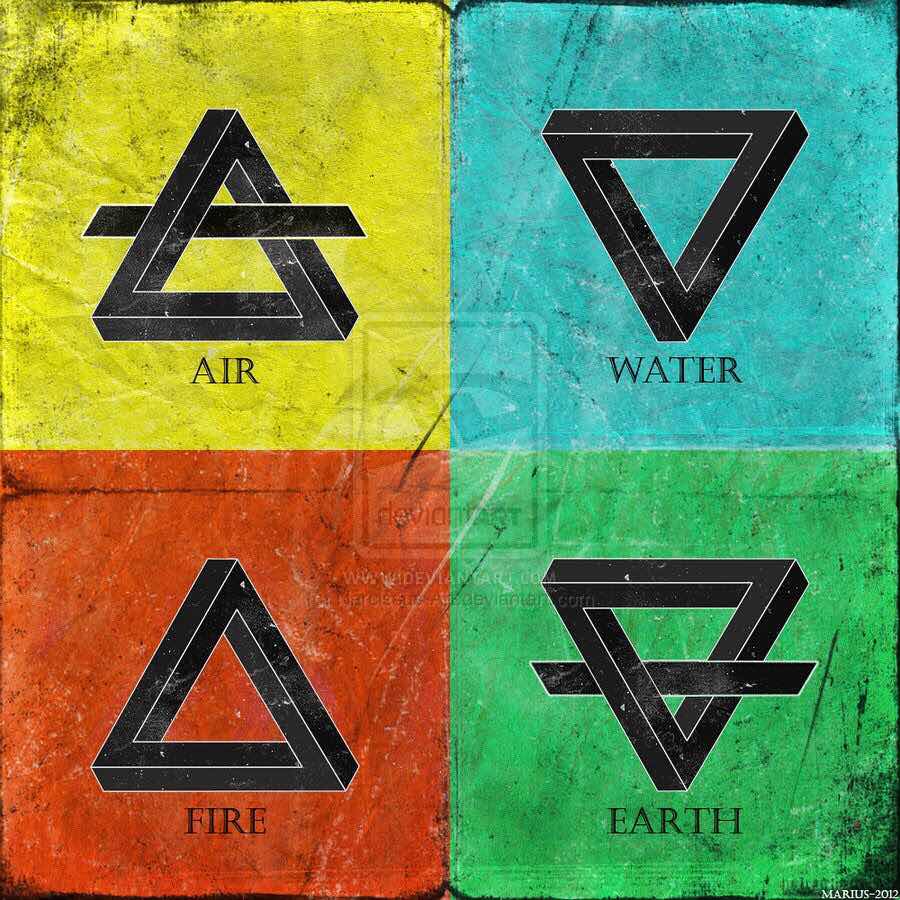
The Greek philosopher Aristotle expanded upon the idea of the four elements around 450 BCE, describing them according to qualities such as hot, cold, wet, and dry. Centuries later, alchemists developed the familiar triangular symbols we still associate with the elements today.

Fire

Fire is the element of transformation, energy, and light.

Often associated with the Sun, Fire is considered warm and dry. Its light pushes back the darkness of night, while its heat provides warmth and energy.

Fire is never truly still. It changes whatever it touches, transforming one thing into another. It can destroy, but it can also create, renew, and inspire. When combined with other elements, its nature can change and intensify. Give Fire air, for example, and its flames can grow larger and burn brighter.

Fire reminds us that change, while sometimes unsettling, is also a natural part of life.

Water

Water is the element of emotion, healing, cleansing, and renewal.

Cool and flowing, Water has long been associated with calmness and peace. It can soothe the body, quiet the mind, and wash away what is no longer needed.

We find Water everywhere: in oceans and seas, lakes and rivers, streams and springs, and in every living thing. From the tiniest microorganism to the largest mammal, all life depends upon it.

Water is also endlessly adaptable. It flows around obstacles, changes its form, and continually moves through the natural world. Perhaps that is why it has become such a powerful symbol of cleansing, purification, renewal, and the ability to adapt.

Air

Air is the element of life, movement, thought, and freedom.

Every living creature depends upon Air. Plants and animals alike require it to survive and thrive, making Air one of the most fundamental forces of life.

We cannot see Air itself, but we know it through its movement—the gentle touch of a breeze, the strength of the wind, or the breath within our own bodies.

Air has traditionally been associated with the mind, communication, inspiration, and the movement of energy. Like our thoughts, it is constantly moving and changing, surrounding us even though we cannot hold it in our hands.

Every breath is a quiet reminder that we are part of the natural world.

Earth

Earth is the element of grounding, stability, nourishment, and life.

Of the four elements, Earth is perhaps the one we experience most directly beneath our feet. Its cool and solid nature provides a foundation for everything that lives and grows.

Earth is found in fields and forests, hills and mountains, valleys and plains. It gives plants a place to take root and provides the soil from which food and nourishment emerge.

Everything we eat ultimately comes from the Earth. Every home, every forest, every garden, and every living creature is connected to it in some way.

Earth reminds us of our roots and our connection to the physical world. It represents stability, patience, fertility, and abundance—the quiet foundation upon which life is built.

A Living Balance

Earth, Water, Air, and Fire are more than ancient symbols. They offer us a way of looking at the natural world and recognizing the countless ways these forces interact with one another.

Earth gives us a place to stand.
Water gives us life.
Air gives us breath.
Fire gives us warmth and transformation.

Together, they remind us that we are not separate from nature. We are part of it.


Thursday, August 20, 2026

Poprock & Juno

 We just wanted to share this photo of Poprock and our youngest Juno with you.


Take Me To The Trees


🌳 Trees are vital to life.

As the largest plants on Earth, they do so much more than simply stand quietly around us. They produce oxygen, store carbon, help hold our soil in place, and provide food and shelter for countless species of wildlife.

They’ve also given us many of the materials we’ve relied on for generations—for tools, homes, warmth, and so much more.

Trees truly are one of nature’s greatest gifts. 🌿