Ostara

Thursday, January 8, 2026

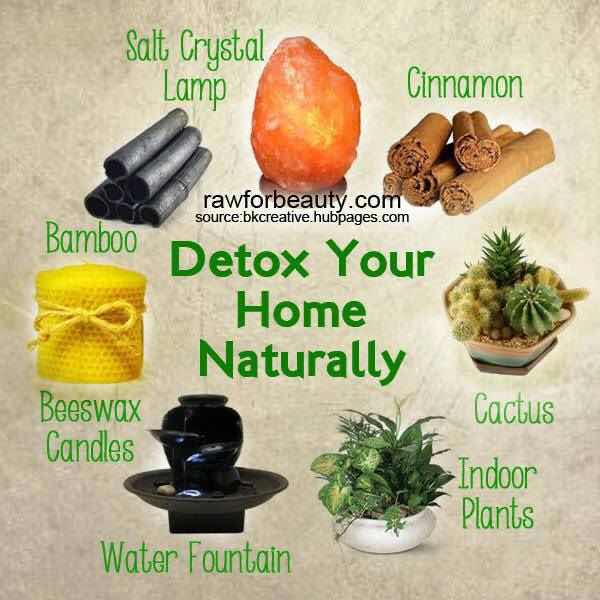
Detox Your Home


Researchers say indoor air can be 10 times more polluted than the air outdoors. 

This is because of the many toxic products we have in our homes, such as formaldehyde and benzene released from furniture, rugs, plastic and paints. 

These products can then trigger headaches, fatigue, wheezing, allergic reactions, or a bad mood. 

Air purifiers work, but there are other ways to clear the air as well.


1) BAMBOO -

Bamboo is used often in Asia to clean the air. 

Not bamboo as a stalk in its green state. 

When bamboo is baked at ultra-high temperatures, it turns into absorbent charcoal. 

This charcoal becomes an odor magnet which then draws in bad odors and also hazardous chemicals like formaldehyde, benzene, and ammonia. 

Many people throughout Asia have used bamboo in briquette form for hundreds of years to eliminate odors from kitchens, bathrooms, closets, shoes, etc.


2) A SALT CRYSTAL LAMP 

When the salt gets heated by the low wattage bulb, salt crystals are released into the air and attach to impurities, weighing them down so they cannot circulate and you will not breathe them in. 

It will also neutralize pollutants and toxins, and it offers light therapy. 


3) CINNAMON 

Unfortunately the cinnamon often found in stores is not real cinnamon - just something that looks like it.

There are two main types of cinnamon:

Ceylon cinnamon: Also known as “true” cinnamon, and this is the one we are talking about here.

Cassia cinnamon: This is the more common variety today, what people find in the grocery store. We’re not talking about this one.


Studies show that the scent of cinnamon reduces fatigue, makes you feel happier, and increases your attention span. Simmer 1-2 tablespoons of ground cinnamon in a pan of water and the whole house will smell fresh and clean. 

Those scented air fresheners on the market actually create toxic air by releasing dozens of chemicals as well as carcinogens.


4) BEESWAX CANDLES 

Only real beeswax will do, and they should be made from 100% natural beeswax. 

Regular candles on the market are often made solely from paraffin with added chemical scents; this then adds smoke and toxins to the air - whereas the beeswax literally cleans the air by producing pollution clearing negative ions (like the salt crystal lamp). 

The initial cost may be higher but then they last five times longer. Make sure it says 100% beeswax on the label.


5) A CACTUS 

Scientist in Switzerland have discovered that employees who suffer from tiredness and headaches feel more energized if a cactus is placed near their monitors. 

It is thought that cacti have compounds that counter the effects of electromagnetic pollution and radiation emitted from the screen.


6) WATER FOUNTAIN -

Once again it is the negative ions at play (or work), like the salt crystal lamp and the beeswax candles. 

The water fountain will wash away airborne germs. 

The flowing water will release negative ions - air molecules that have broken apart, that then attach themselves to air pollutants dragging them down so you cannot breathe them in. 

Researchers say the fountains are so effective at cleaning air - they work as well as a HEPA filter.


7) HOUSE PLANTS -

Houseplants are the most popular and most commonly used air cleaner used by people.

Some work better than others. NASA scientists have found that houseplants, like spider plants, and flowers like mums and gerbera daisies can remove up to 87% of toxic indoor air all in one day; this includes carbon monoxide and cigarette smoke. 

Plants naturally have a built in filtration system that suck in hazardous particles and then neutralize them. Rooms with plants are said to contain half the amount of airborne microbes as rooms that do not have plants.
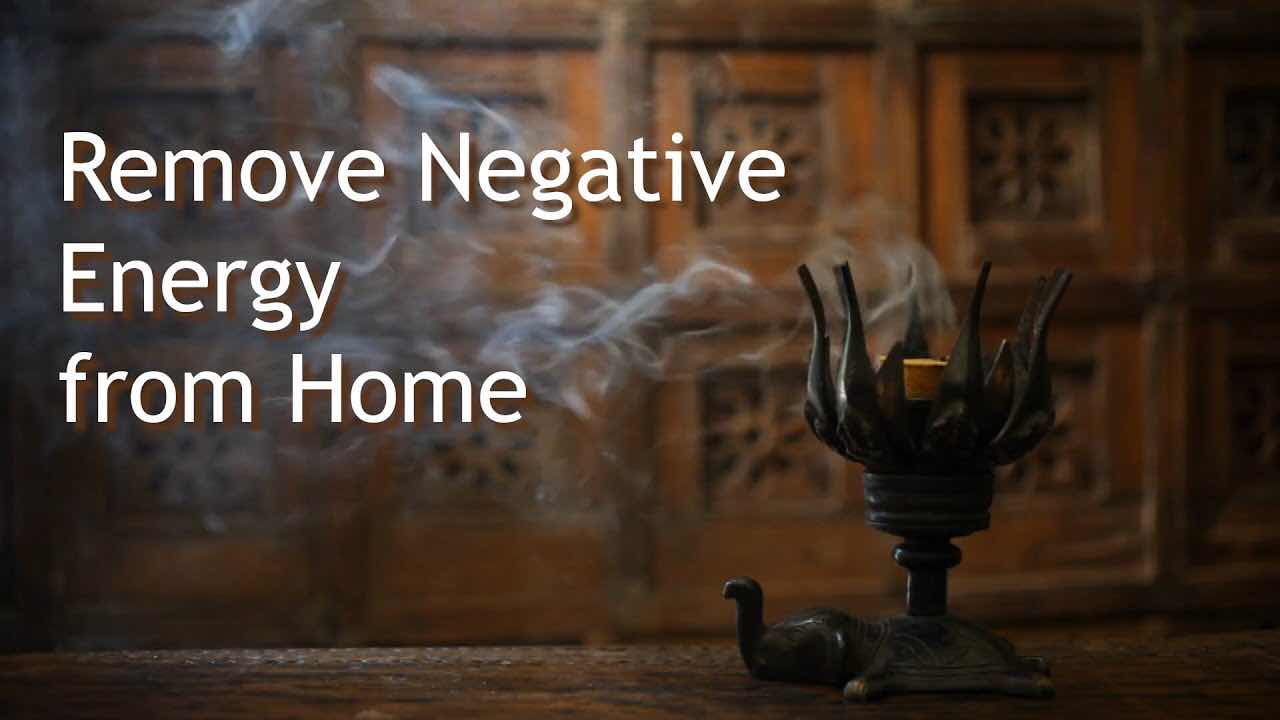


9 Different Sacred Smudging Herbs 


Thanks to thespiritscience where this information first appeared and to bestblender.


1. Lavender 

Lavender is a herb that we tend to use for a number of things already and smudging it is a wonderful treat. It promotes peace and relaxation. If you’ve been needing a bit more rest you should consider it. 


2. White Sage 

White sage is my favorite above all else. It is used to clear negative energies and does well for me. I use this one at least once a month if not every two weeks and it can help with stagnant energies in some big ways.


3. Common Sage 

Regular sage overall is also used for cleansing and is great at helping to release negativity but it doesn’t necessarily work as well as white sage to me. If you want something that is a good start this is an option I would never turn someone away from.


4. Cedar Wood

While it might sound odd cedar is great for helping get rid of fear. It offers us a sense of power we do not find elsewhere. If you’re already operating properly this can be a great tool to make things easier.


5. Rosemary

Rosemary is often used to help to rid of sickness and clearing of the mind. It will make you feel better overall and I have when using it noticed it bring a sense of weight being lifted from my shoulders forth. While that might sound weird, it is quite true for me.


6. Blue Spruce

When smudging blue spruce you’re bringing forth a more generous atmosphere. This meaning you’re bringing in kinder energies and allowing them to work their magic. While not always the best on its own when paired correctly this is also a wonderful tool to have.


7. Palo Santo

Palo Santo is a very common one that you will likely hear about often. It helps to heal the body and can cleanse the home as well. It is often used when someone is ill.


8. Pine 

Pine itself has rejuvenating properties and is used in smudging for a number of things. It is more commonly used to help others heal and can work wonders on your emotional state. I use pine quite often myself.


9. Lemongrass

Lemongrass is a great thing to smudge when you’re trying to remove obstacles and open doors. For instance, if you’ve been feeling stuck you may want to add this one to your list of things to pick up. It will make you feel much freer.

While there are tons of other herbs as well these are easily my top 9 go-to’s. If you think any of these speak to you perhaps you should give them a go. If not, try looking into things and choosing some for yourself. For information on how to smudge please check out the video below.

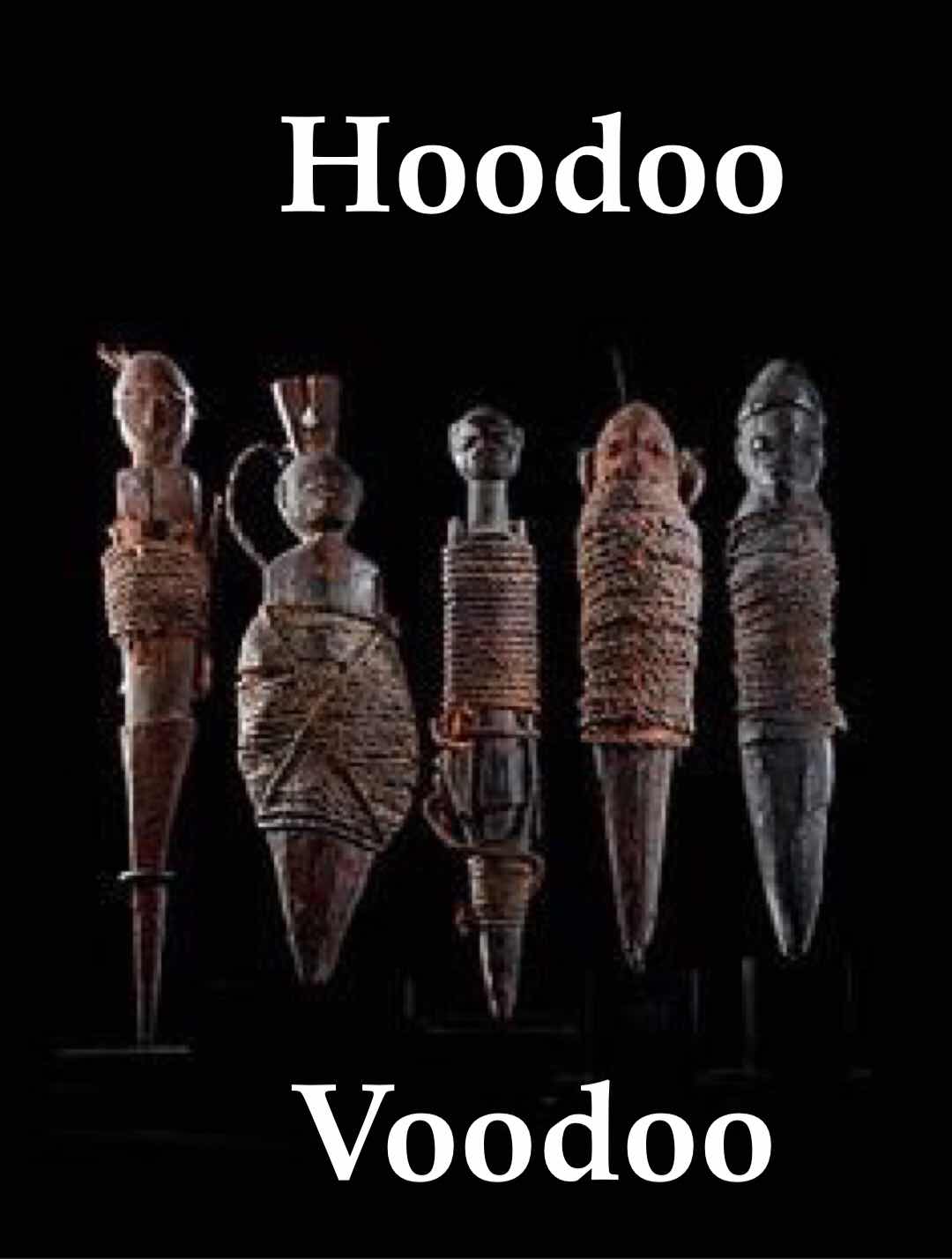
Hoodoo and Voodoo


For many Hoodoo offers a connection to a spiritual self that provides the tools to directly handle the issues that come up in daily life.

Hoodoo doesn’t have the barriers that many magical practices have—there’s just the work, and how you use it is up to you. 


Hoodoo grounds it’s followers and helps find peace in troubling times. 


Hoodoo has been around a long time and is actually its own practice with its own rules and history. 

The  practice isn’t known by “spells,” but “work” or “chores.” 


Hoodoo is an African American tradition. 

It was created by enslaved people from various spiritual practices that they adapted to the land they found themselves in. 


Hoodoo is also known by other names, mainly conjure or rootwork. 

People who practice hoodoo work with a number of tools, such as candles, curios, and, of course, roots and herbs, most of the work we do is concerned with healing and protection.


Hoodoo Isn’t Voodoo

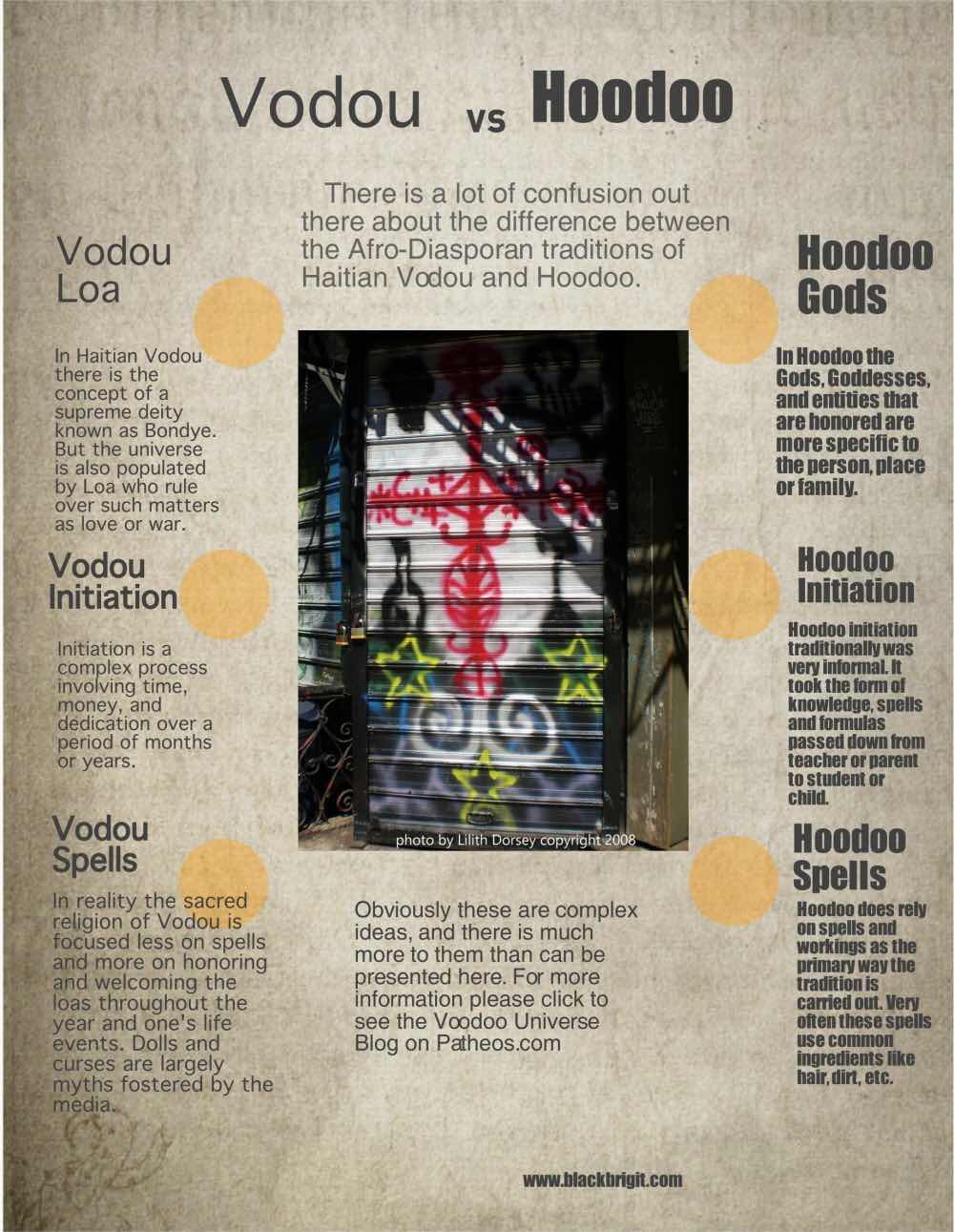
Hoodoo and voodoo are very different. Voodoo, which is also spelled vodou, voudou, and voudun, is an actual religion that is believed to have originated in Haiti and has roots in West African spiritual traditions.


As a religion, voodoo has specific practices, some of which you have to be ordained to perform. It has religious leaders, known as mambos and houngans, who oversee these practices. It has a set of deities and spirits that are worshipped and respected.

We’ll discuss Voodoo more in a moment.


Hoodoo on the other hand does not have these things. Although there is a belief in spirits and life-giving energies, there are no specific gods or god that you must follow. 

You are free to worship any gods (or not) that you want. 

There is no organized hierarchy. 

This isn’t to say there are no rules to working with roots—there are, but it does not have the specific structure associated with religion.


Hoodoo is based in the African heritage, and as such, it is usually practiced only by the Black community.

Hoodoo isn’t closed, it’s restrictive, honoring the African American ancestors who practiced it and you must do work from an Afrocentric perspective.


Even though many believe only members of the black community should practice Hoodoo, there are those who feel race really has nothing to do with it, it’s rather economic status. 

Actually, each region of the South has its own brand of Rootwork/Conjure/Hoodoo. 

That’s what makes these systems so personal. 


The Appalachians have a brand of hoodoo practiced by both white and blacks. 

New Orleans is very much the same. 

So, even though it’s restricted, it’s more status than by race.


Hoodoo is the name of a conglomerate of different Southern Conjure folk practices. 

Not all of them are related to the African American community. 


The practices of Hoodoo/Conjure/Rootwork were founded out of repression. 

Practiced in part by African Americans, some of which were slaves, yes, but who’d forgotten their gods for the ones of their masters. This is why Hoodoo/Conjure is so heavily influenced by Protestantism. 

Or, in the case of New Orleans Voodoo, by Catholicism. 


There is a major difference that lies between what Hoodoo defines, and what Voodoo defines. 

Voodoo is the religion, or belief system, of many African Americans living in the Mississippi Valley. 

Hoodoo, on the other hand, is the magic that has derived from the teachings of Voodoo, which was originally a part of Voodoo. 

Hoodoo is the craft; the practice, where Voodoo is the mindset and monarchy. 


New Orleans Voodoo is a cultural strand of the Afro-American religions rooted in West African Dahomeyan Vodun. Voodoo is a result of this African diaspora.


Most especially as a result of the slave trade, West African Dahomeyan Vodun was fused with Catholicism and Francophone beliefs in the South. Voodoo especially developed along the Mississippi in the south, mostly in the larger towns of Louisiana and Mississippi, and of course with its largest influence falling in the town of New Orleans. 


An combination of French, Creole and Spanish influence, this melting pot of religion fusions is what brought us Voodoo Dolls, Gris-gris, Mojo bags, and such.

Voodoo’s belief system centers around one detached God who stays at a distance, and does not interfere in a person’s life unless called. 


The spirits are the ones who truly help us with what we need on a daily basis. 

There is a connection with the spirits around us through song and dance, writing, candle spells, symbolism, and connecting with our own spiritual self. 

The use of snakes as symbols and loa (spirit forms) is like a current that runs through Voodoo; the snakes symbolize how knowledge and a connection to the spiritual self can heal. How insight and enlightenment can lift our spirits away from the dredges of what pain and misery have to offer. 


Those who practice Voodoo today hope to influence the greater good, and the greater outcome, through an ever-deepening connection with mama nature, the spirits that constantly surround us, and our ancestors’ aid. 

As a sign of respect to the spirits, the practice of rituals are done in private, showing commitment and integrity without ego.


Ego only stands to distract us from pure happiness. 

When we allow our ego to take over, we lose sight of what we really care about. 

We get too caught up in the ‘more’ of what we want and lose our focus. 


The ego has the ability to dirty up our waters of purity.

When the ego is in play, we find ourselves always wanting more than what we have. 

We find ourselves chronically dissatisfied with what we already possess, and we forget to find happiness in what is already in front of us, loving and urging us onward in our journey. 


It is always important to not only maintain healthy boundaries with your own ego, but with those in your life who let the ego run their lives.

Voodoo and Hoodoo both are designed to improve life and strengthen the individual physically and spiritually.


Wednesday, January 7, 2026

Marie Laveau Voodoo


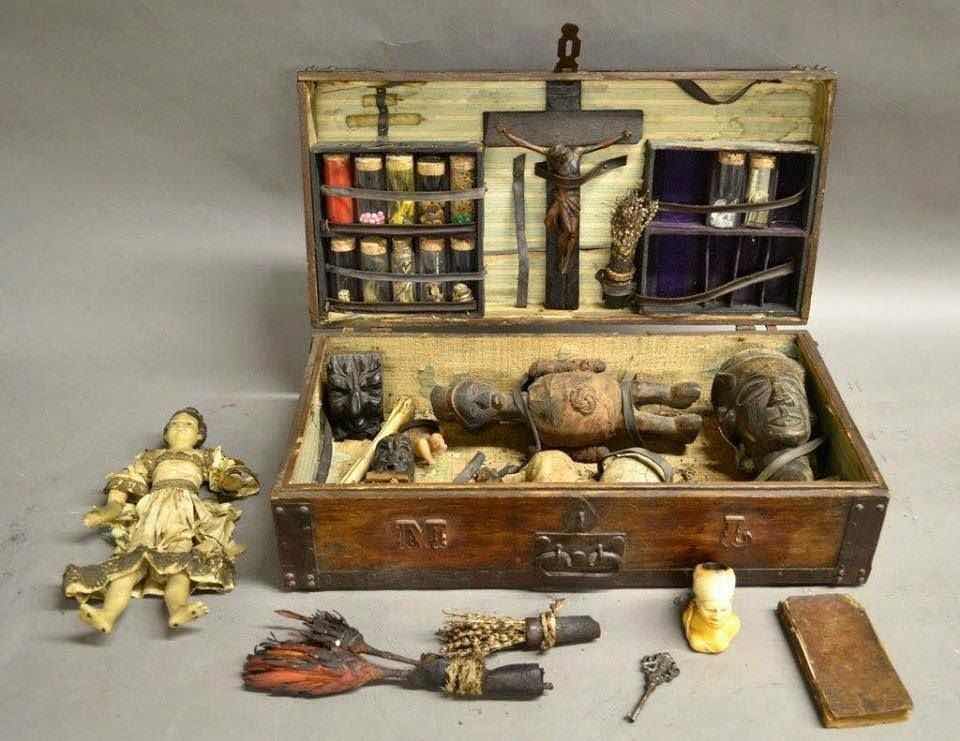
We’ve been in New Orleans for several months now and our interest in Marie Laveau as a Voodoo practitioner is why we are sharing this post again.

This Voodoo box below was the one Marie Laveau used, or one of her disciples.
It’s from around 1850.


Marie Laveau became the most famous and powerful Voodoo Queen of New Orleans. 

She was respected and feared by all. Voodoo in New Orleans was a blend of West African religion and Catholicism. 


It is believed that you can come to Marie's tomb and ask for something. 

She accepts money, cigars, white rum and candy as offerings. 

Appeals must be made 3 times with full concentration. 

In voodoo it is believed that when a Voodoo Queen dies her spirit re-enters the river of life and moves to the next realm, adjacent to this one. 

Her spirit will always be here, close at hand, in New Orleans. To this day, people still visit her tomb with the hope that she will grant their wishes." Midge, tour guide for Hoodoo Tours, LTD in Voodoo on the Bayou

"Marie Laveau was a voodooienne. She was the queen of them all.”


Above photos is Marie Laveau’s tomb before restoration. 
The photo below is after the restoration.


Ostara is Coming


Ostara is just one of the names applied to the celebration of the spring equinox around March 20. 
The Venerable Bede said the origin of the word is actually from Eostre, a Germanic goddess of spring. 
Of course, it's also the same time as the Christian Easter celebration, and in the Jewish faith, Passover takes place as well. 
For early Pagans in the Germanic countries, this was a time to celebrate planting and the new crop season. 
Typically, the Celtic peoples did not celebrate Ostara as a holiday, although they were in tune with the changing of the seasons.

A dynasty of Persian kings known as the Achaemenians celebrated the spring equinox with the festival of No Ruz -- which means "new day." 
It is a celebration of hope and renewal still observed today in many Persian countries, and has its roots in Zoroastrianism. 
In Iran, a festival called Chahar-Shanbeh Suri takes place right before No Ruz begins, and people purify their homes and leap over fires to welcome the 13-day celebration of No Ruz.

Spring equinox is a time for fertility and sowing seeds, and so nature's fertility goes a little crazy. 
In medieval societies in Europe, the March hare was viewed as a major fertility symbol -- this is a species of rabbit that is nocturnal most of the year, but in March when mating season begins, there are bunnies everywhere all day long. 

The female of the species is superfecund and can conceive a second litter while still pregnant with a first. As if that wasn't enough, the males tend to get frustrated when rebuffed by their mates, and bounce around erratically when discouraged.

The story of the Roman god, Mithras, is similar to the tale of Jesus Christ and his resurrection. 
Born at the winter solstice and resurrected in the spring, Mithras helped his followers ascend to the realm of light after death. 
In one legend, Mithras, who was popular amongst members of the Roman military, was ordered by the Sun to sacrifice a white bull. 
He reluctantly obeyed, but at the moment when his knife entered the creature's body, a miracle took place. The bull turned into the moon, and Mithras' cloak became the night sky. 
Where the bull's blood fell flowers grew, and stalks of grain sprouted from its tail.

In ancient Rome, the followers of Cybele believed that their goddess had a consort who was born via a virgin birth. 
His name was Attis, and he died and was resurrected each year during the time of the vernal equinox on the Julian Calendar (between March 22 and March 25). 

Around the same time, the Germanic tribes honoured a lunar goddess known as Ostara, who mated with a fertility god around this time of year, and then gave birth nine months later – at Yule.

The indigenous Mayan people in Central American have celebrated a spring equinox festival for ten centuries. 
As the sun sets on the day of the equinox on the great ceremonial pyramid, El Castillo, Mexico, its "western face...is bathed in the late afternoon sunlight. 

The lengthening shadows appear to run from the top of the pyramid's northern staircase to the bottom, giving the illusion of a diamond-backed snake in descent." 
This has been called "The Return of the Sun Serpent" since ancient times.

According to the Venerable Bede, Eostre was the Saxon version of the Germanic goddess Ostara. 
Her feast day was held on the full moon following the vernal equinox -- almost the identical calculation as for the Christian Easter in the west. 

There is very little documented evidence to prove this, but one popular legend is that Eostre found a bird, wounded, on the ground late in winter. 
To save its life, she transformed it into a hare.
But "the transformation was not a complete one. 
The bird took the appearance of a hare but retained the ability to lay eggs...the hare would decorate these eggs and leave them as gifts to Eostre."

This is a good time of year to start your seedlings. 
If you grow an herb garden, start getting the soil ready for late spring plantings. 
Celebrate the balance of light and dark as the sun begins to tip the scales, and the return of new growth is near.

We celebrate Ostara as a time of renewal and rebirth. 
Take some time to celebrate the new life that surrounds you in nature -- walk in park, lay in the grass, hike through a forest. 
As you do so, observe all the new things beginning around you -- plants, flowers, insects, birds. Meditate upon the ever-moving Wheel of the Year, and celebrate the change of seasons.

Thanks to paganesque for the article.

For our friends in the Southern Hemisphere, we wish you a happy Beltane.
Every season has its own energy. 
When you work in harmony with that energy, you increase the power of your celebration. 
Working in contrast to it, naturally, decreases the flow.