Going back to Anglo-Saxon pagan tradition of origin, first references of lighting the Yule log are rooted in 12th-century Germany.
By the 17th century, Christians had melded pagan mythos with their own.
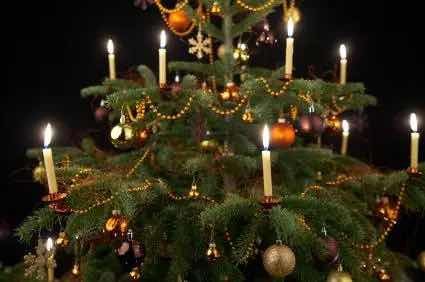
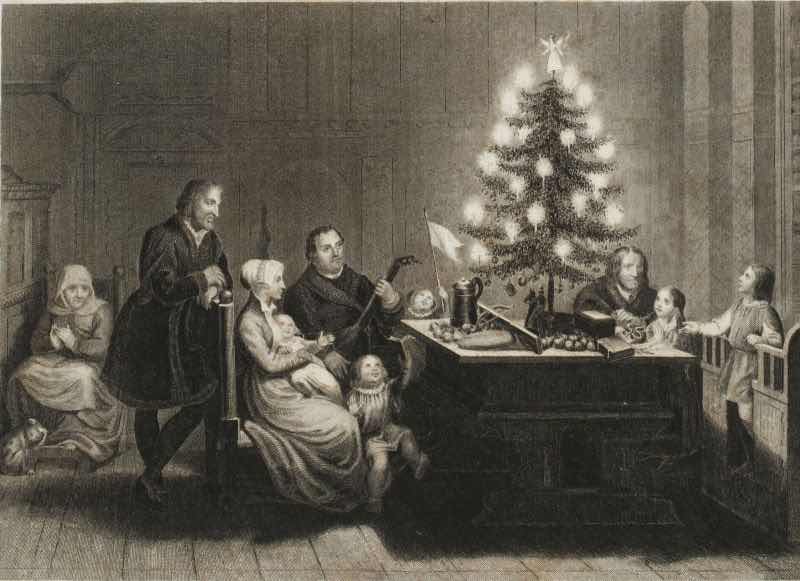
The practice of the Yule log had evolved into lighting small candles on the iconic Christmas tree.
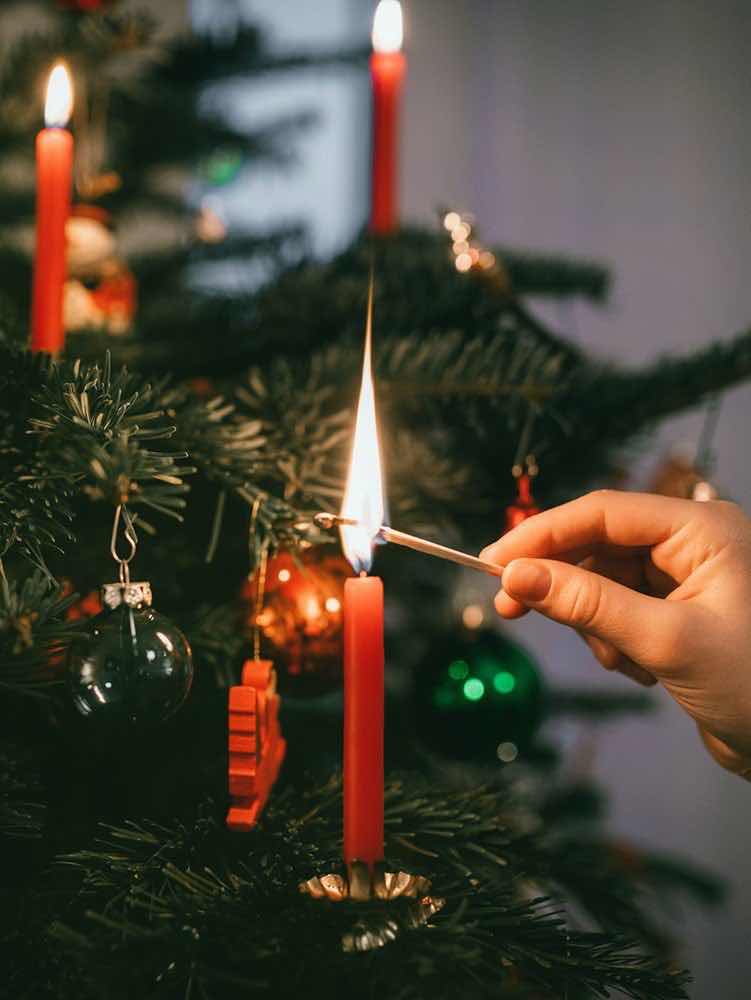
Christmas lights actually started out just as candles.
These candles were attached to the tree using wax or pins.
The practice began in Germany during the 17th century and over the next 200 or so years; it became an established practice in Germany and began to spread out into other countries of Eastern Europe.
Throughout history, candles have been used to ward off darkness and evil.
The first use of candles in December was during the Roman Saturnalia festival, where tall tapers of wax were offered to Saturn as a symbol of his light and also given as a gift to guests.
The Pagans also used candles during their Yule festivities, with candlelight and bonfires being used to welcome the nights beginning to get lighter.
As Christianity became more widespread, candles were put in the front windows of houses in order to guide Jesus as he went from house to house on Christmas Eve, wait, isn’t that Santa’s job?
Even though families would use candles to light up their Christmas trees, this practice was dangerous and led to many home fires.
Edward H. Johnson put the very first string of electric Christmas tree lights together in 1882.
He hand-wired 80 red, white and blue light bulbs and wound them around his Christmas tree.
Not only was the tree illuminated with electricity and candles would soon be history.
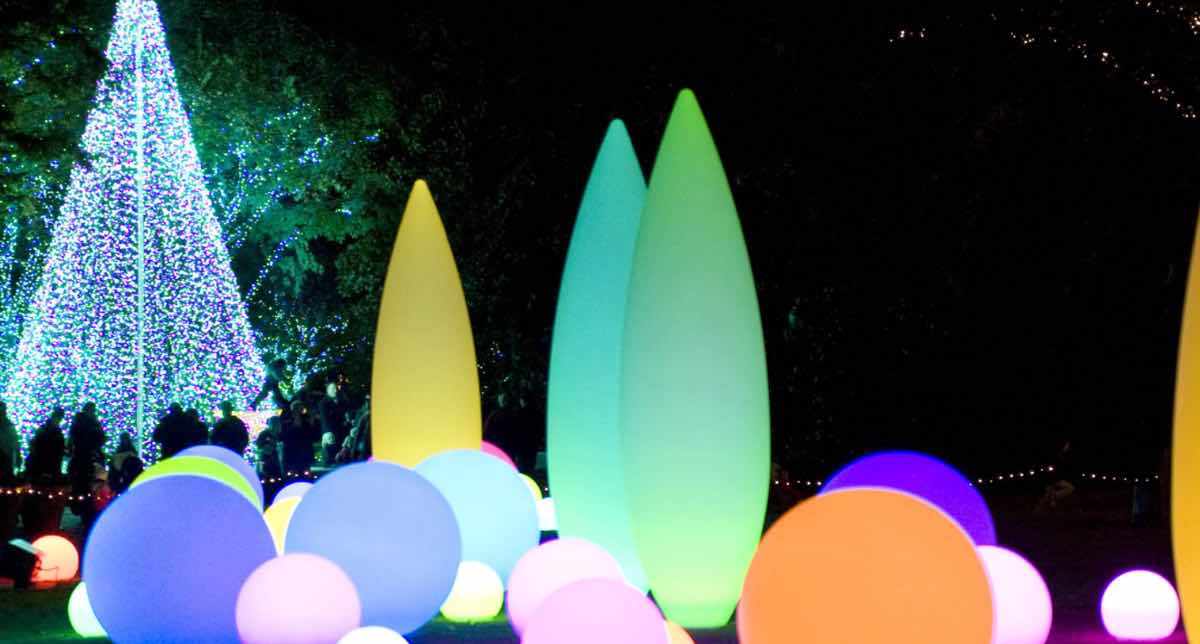
And now these days, there are so many varieties of Christmas lights to choose from.


We’ve all heard about the Twelve Days of Christmas, but as you probably know, there’s also the Pagan celebration of Yule, it’s twelve days long as well, starting with the winter solstice on December 21 and ending on January 1.
When people followed a lunar calendar there were twelve days “leftover” at the end of the year.
These twelve nights became a special time where the veil between the worlds was thin and there were celebrations.
Yuletide dates have changed somewhat over the years, but were almost always twelve days.
Some say the pre-modern celebration often started on December 23 and went through January 3.
In ancient Rome, the festival of Saturnalia (honoring Saturn—the god of agricultural bounty) lasted about a week at this time of year. (Christmastide is also twelve days long from December 25 through January 6th —Epiphany.)
What Does Yule actually Celebrate?
Beginning with the Winter Solstice celebration, Yuletide kicks off with a celebration of the lengthening amount of sunlight that we welcome as we move away from the day with the least “daytime” during the year.
Almost every celebration has origins welcoming the rebirth of the sun or the sun god in some way.
This is also referred to as Mother’s Night, honoring the Mother Goddess (& the coming of spring) along with the protective female ancestors who watch over us.
There are many winter solstice celebrations across the globe.
The most well-known are likely at Stonehenge in England and Newgrange in Ireland, structures built thousands of years ago directly oriented to the sun.
Yuletide concludes with the celebration on the Twelfth Night, which often coincides with the modern New Year celebrations of revelry, food, and drink.
The Twelfth Night is also associated with the burning of the greens for good luck.
Modern pagans often have a Yule tree as part of their celebration, although early pagans would likely not have done so.
Instead, they would have only cut boughs of evergreens for decoration within their homes.
These may have been left up until Imbolc at the beginning of February when they would have been removed and possibly burnt.
Other traditions that were initially part of the pagan or pre-Christian festival of Yule have come to be part of the Christmas tradition, including the use of holly and ivy and mistletoe as decorations, the burning of the Yule log, and gift giving, which was an important part of the Roman Saturnalia festival.
And, of course, songs were sung in celebration at the time of the winter solstice and throughout Yuletide.