Ostara

Monday, April 7, 2025

Easter


In 325 CE, the Council of Nicaea established that Easter would be held on the first Sunday after the first Full Moon occurring on or after the vernal equinox.

From that point forward, the Easter date depended on the ecclesiastical approximation of March 21 for the vernal equinox.


Easter is a Pagan festival, it really is as simple as that.

While Pagans are celebrating the Spring Equinox, religious culture celebrates the resurrection. 

However, early Christianity accepted ancient pagan practices, most of which most people practice today at Easter. 


The death of the son (sun) on a cross (the constellation of the Southern Cross) and his rebirth, overcoming the powers of darkness, was a well worn story in the ancient world. 


There were a lot of other resurrected saviours too.

The Sumerian goddess Inanna, or Ishtar, was hung naked on a stake, and was subsequently resurrected and ascended from the underworld. 


One of the oldest resurrection myths is Egyptian Horus. Born on 25 December, Horus and his damaged eye became symbols of life and rebirth. 


Mithras was born on what we now call Christmas day, and his followers celebrated the spring equinox. 

Even as late as the 4th century AD, the sol invictus, associated with Mithras, was the last great pagan cult the church had to overcome. Dionysus was a divine child, resurrected by his grandmother. 


Dionysus also brought his mum, Semele, back to life.


It’s all about the resurrection.


Although we see no celebration of Easter in the New Testament, early church fathers celebrated it, and today many churches are offering "sunrise services" at Easter – an obvious pagan solar celebration. 


The date of Easter is not fixed, but instead is governed by the phases of the moon – that’s pretty much Pagan.

And there are all the familiar things about Easter are certainly Pagan. 


Bunnies are from the Pagan festival of Eostre, a great northern goddess whose symbol was a rabbit or hare. 

Exchange of eggs is an ancient custom, celebrated by many cultures. 


Hot cross buns are very ancient too. In the Old Testament we see the Israelites baking sweet buns for an idol, and religious leaders trying to put a stop to it. 


The early church clergy also tried to put a stop to sacred cakes being baked at Easter. 

In the end, in the face of defiant cake-baking Pagan women, they gave up and blessed the cake instead.


Easter is essentially a pagan festival which is celebrated in churches for totally different reasons than they were originally were honored.




We Love Cats

Regardless of what anyone says, cats aren't evil. They are a wonderful, beneficial part of our lives. 


Raise Your Vibration


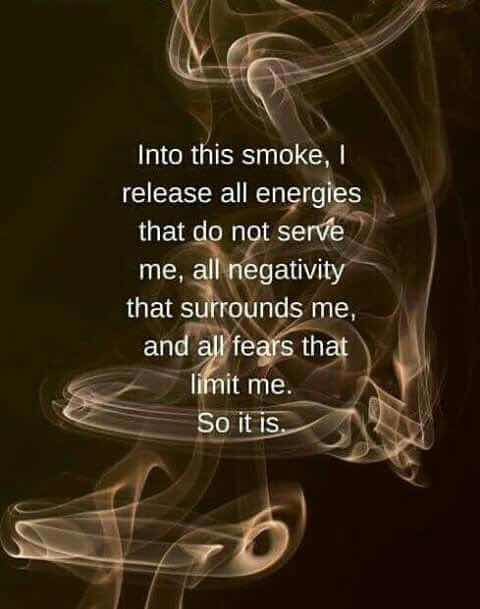
Smudging is another way to clear negative energy and raise vibrations. 
Burning sage with the intent of clearing old energy is a wonderful way to cleanse and move the stagnant energy out of our homes. 
As a result, we raise our personal vibrations and the vibration of our home.

1) Nature’s Antidepressant
Negative ions, a topic scientific circles are talking about.
It looks like negative ions have a profound and positive effect on the physiology of every human being. Ions are atoms or molecules with a net electric charge due to the loss or gain of one or more electrons. Negative ions are produced in natural settings (such as in nature) while positive ions are produced in more contemporary places such as in the house. Electronics, in particular, give off lots of positive ions.
It appears that the negative ions produced from smudging offer effective antidepressant effects.

Dr. Clarence Hansell, a research engineer who studied the effects of negative ions on humans in the 1930s, noticed that the mood of one of his colleagues changed when ions were being generated by nearby equipment. He noticed his colleague was more joyful when the machine created negative ions and more sullen when it produced positive ions. 
In a controlled study focused on Seasonal Affective Disorder, or SAD (an extension of Hansell’s work), researchers found fresh air charged with negative ions was an effective treatment for depression. 
This is in large part due to its effects on serotonin levels, similar to the way antidepressant drugs work.

2) Clearing Negative Energy
Because smudging actually destroys bacteria in the air, it also has a psychologically clearing effect. 
This can allow us to relax in environments that may be a little harder settle in. 
Thankfully smudging gives off plenty of negative ions!

3) Clearing the Air
Surprisingly, smudging can help clear the air of all kinds of bacteria and improve allergy symptoms. 
This was a study that corroborated this ancient practice. Here is the researcher’s take:
“We have observed that 1 hour treatment of medicinal smoke emanated by burning wood and a mixture of odoriferous and medicinal herbs (havan sámagri=material used in oblation to fire all over India), on aerial bacterial population caused over 94% reduction of bacterial counts by 60 min and the ability of the smoke to purify or disinfect the air and to make the environment cleaner was maintained up to 24 hour in the closed room.

4) Relaxing Effects
Just like incense, smudging can offer calming, relaxing effects that are known to help lower blood pressure, relieve stress and tension and normalize breathing rates, as the negative ions produced are absorbed directly into your bloodstream.

5) Increased Energy
Negative ions have the effect of helping to normalize serotonin (the feel-good hormone), boosting the mood and overall energy. This is great for depression.

6) Improved Sleep
So if we know that negative ions are more of a ‘natural’ thing, it would make sense we’d not only feel better but sleep better too, right? Absolutely! 
And in fact, studies show people do sleep better in negative ion environments.