




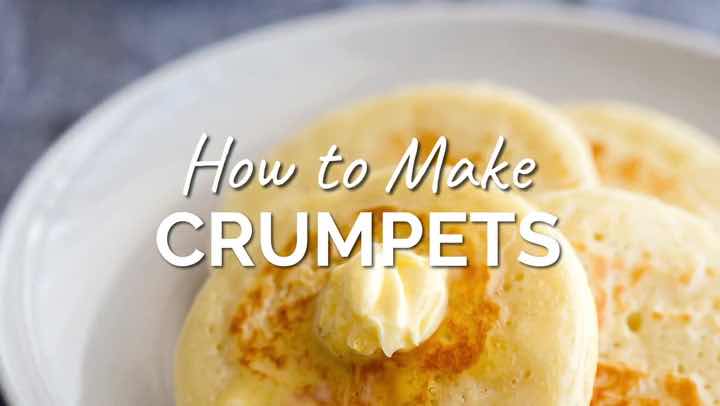
HOMEMADE CRUMPETS Crispy, chewy and absolutely delicious.
You simply won’t be able to resist this authentic homemade crumpets recipe.
What Are Crumpets?
Crumpets are English griddle cakes made from flour, milk/water and yeast and are traditionally eaten for breakfast or with afternoon tea.
Crumpets originated in United Kingdom, one of the earliest mentions of “crumpet” came from the English Bible translator, John Wycliffe, who referred to them as “the crompid cake.”
The name is thought to have Celtic origins referring to a “thin, flat cake”.
Do You Need Crumpet Rings to Make Crumpets?
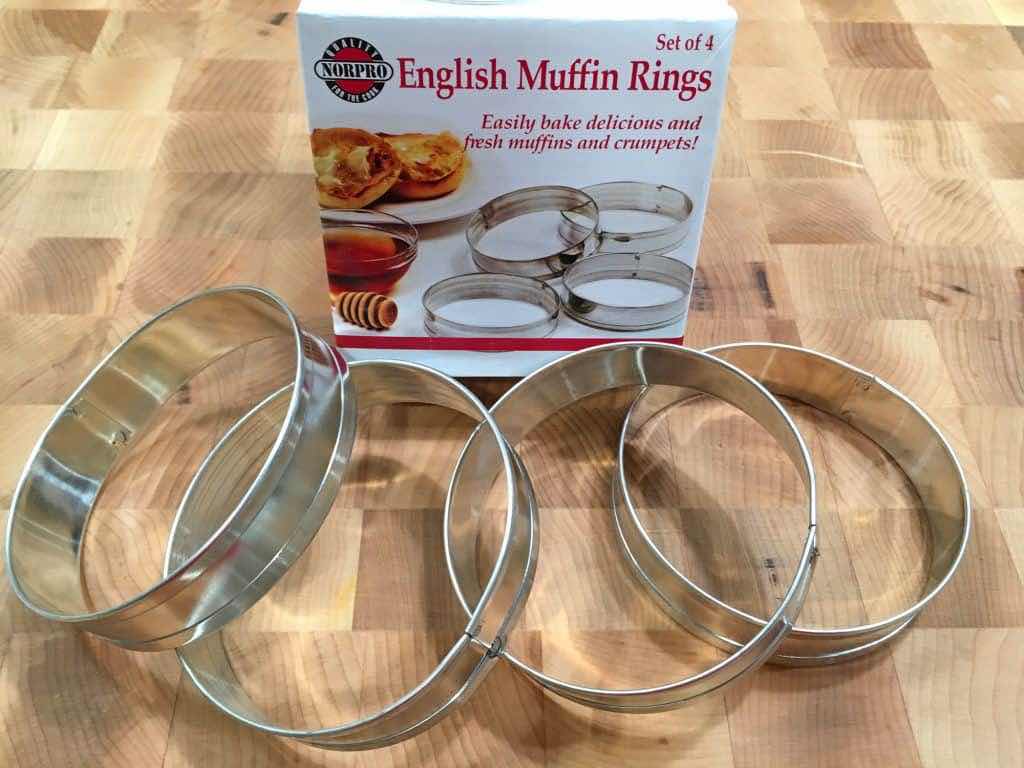
Yes. Crumpet batter is very loose and runny and the crumpets rings are what will shape and hold the batter while the crumpets are cooking.
Can Crumpets Be Frozen?
Yes, crumpets freeze well. Let them cool completely and freeze them in a ziplock bag or airtight container for up to two months. To eat them let them thaw and then toast them.
Traditional Crumpets Recipe
Let’s get started!
Stir the sugar and yeast into the warm milk and let it rest for 10 minutes until frothy.
In a large mixing bowl or the bowl of a stand mixer combine the flour and salt.
Add the liquid to the flour mixture and stir/knead until a thick dough forms.
If using a stand mixer, use the paddle attachment and beat the mixture for about 3 minutes until a thick dough forms.
Cover the bowl loosely with plastic wrap and set it in a warm place to rise for at least an hour or up to two (it should nearly double in size).
This stage is important for the formation of the bubbles that will later form the classic holes in the crumpets.
Dissolve the baking soda in the warm water and add it to the dough.
In addition to the previous proving phase, the baking soda is also what helps aerate the crumpets to give them their classic pores.
Those pores allow the butter later on to soak beautifully into the crumpet and gives them their famous sponge-like texture.
If using a stand mixer, beat the batter for a minute or two.
Or use an electric mixer to beat the batter.
If some small lumps remain that’s okay.
Any remaining lumps will dissolve during the next resting stage.
Cover the batter and let it rest in a warm place for at least 30 minutes.
After 30 minutes the batter should be nice and bubbly.
When you stir it, it will bubble and froth nicely.
Now let’s prepare the crumpet rings.
Oil the inside rims of the crumpet rings.
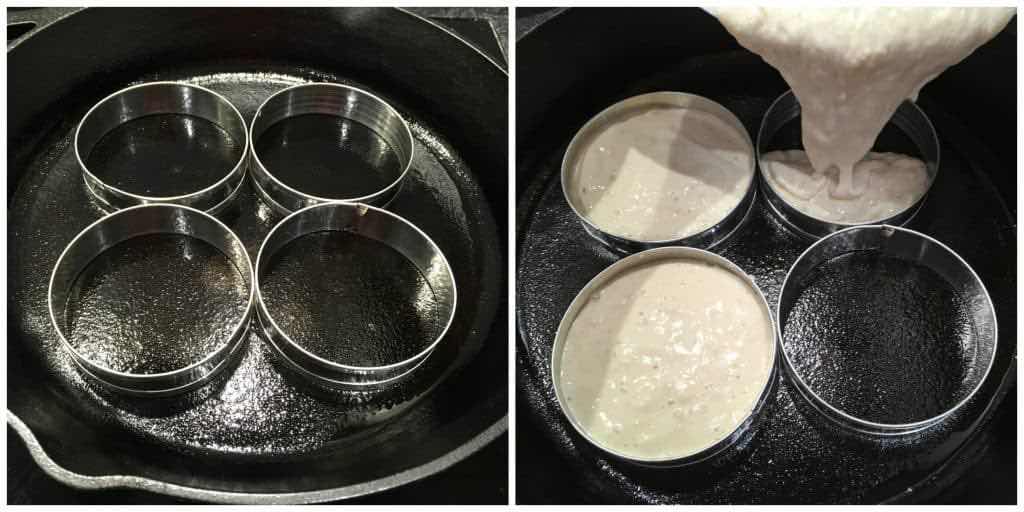
Lightly oil the frying pan.
You can use a regular skillet or a cast iron pan.
Heat the pan and rings over medium-high heat.
Once the rings are hot, pour the batter into each ring until it’s slightly more than half full.
Cooking time will vary depending on your stovetop and frying pan but these will cook for approx 8-10 minutes (the time will vary according to the kind of cooktop and cookware you’re using.
Just be sure to keep an eye on them to ensure they don’t burn on the bottom.
Lower the temp as needed to finish off the cooking.
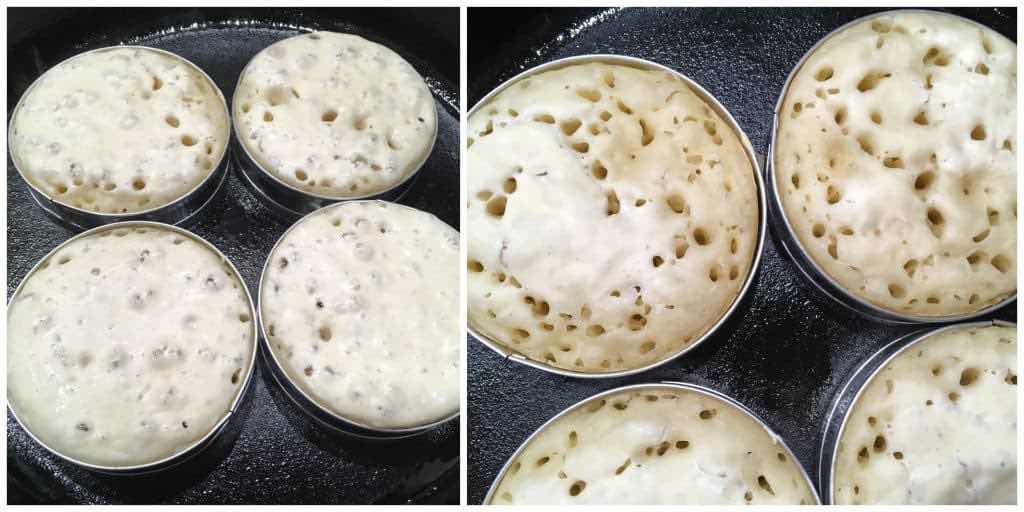
The batter will begin to rise and bubble on top.
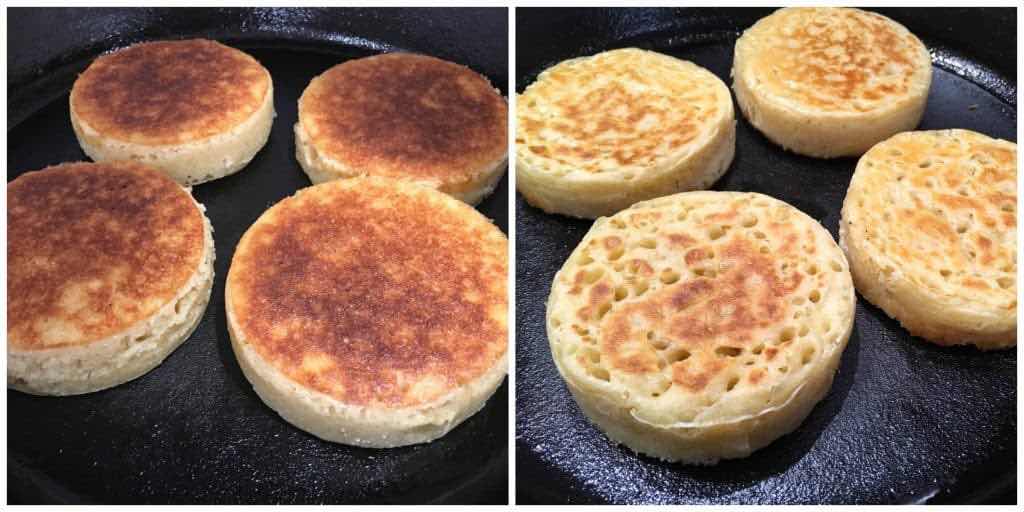
After several minutes when the tops are cooked and the classic pores/holes are present with the bottoms lightly browned, your crumpets are done and you can remove the rings.
Ingredients
2 cups all-purpose flour
1 teaspoon salt
1 cup warm milk
1 tablespoon active dry yeast
1 teaspoon cane sugar
1 cup warm water
1/2 teaspoon baking soda
Instructions
Stir the sugar and yeast into the warm milk and let it rest for 10 minutes until frothy.
In a large mixing bowl or the bowl of a stand mixer combine the flour and salt.
Add the liquid to the flour mixture and stir/knead until a thick dough forms.
If using a stand mixer, use the paddle attachment and beat the mixture for about 3 minutes until a thick dough forms.
Cover the bowl loosely with plastic wrap and set it in a warm place for at least an hour or up to two to let the dough rise (it should nearly double in size).
This stage is important for the formation of the bubbles that will later form the classic holes in the crumpets.
Dissolve the baking soda in the warm water and add it to the dough.
If using a stand mixer, beat the batter for a minute or two.
Or use an electric mixer to beat the batter.
If some small lumps remain that's okay. Any remaining lumps will dissolve during the next resting stage.
Cover the batter and let it rest in a warm place for at least 30 minutes (see note below).
After 30 minutes the batter should be nice and bubbly.
Prepare the crumpet rings by greasing the inside of each rim.
Lightly oil the frying pan.
You can use a regular skillet or a cast iron pan.
Place the rings in the frying pan over medium-high heat.
Once the rings are hot, pour the batter into each ring until it's slightly more than half full.
Cooking time will vary depending on your stovetop and frying pan but these will cook for approx. 10 minutes.
Just be sure to keep an eye on them to ensure they don't burn on the bottom.
Lower the temp as needed to finish off the cooking.
Turn the heat down as needed to prevent burning.
The batter will begin to rise and bubble on top.
After several minutes when the tops are cooked and the classic pores/holes are present with the bottoms lightly browned, your crumpets are done.
Note: You can either remove the rings and flip the crumpets over to cook the other side for another minute or two until golden or remove them from the rings and toast the crumpets.