
Ostara

Monday, March 3, 2025

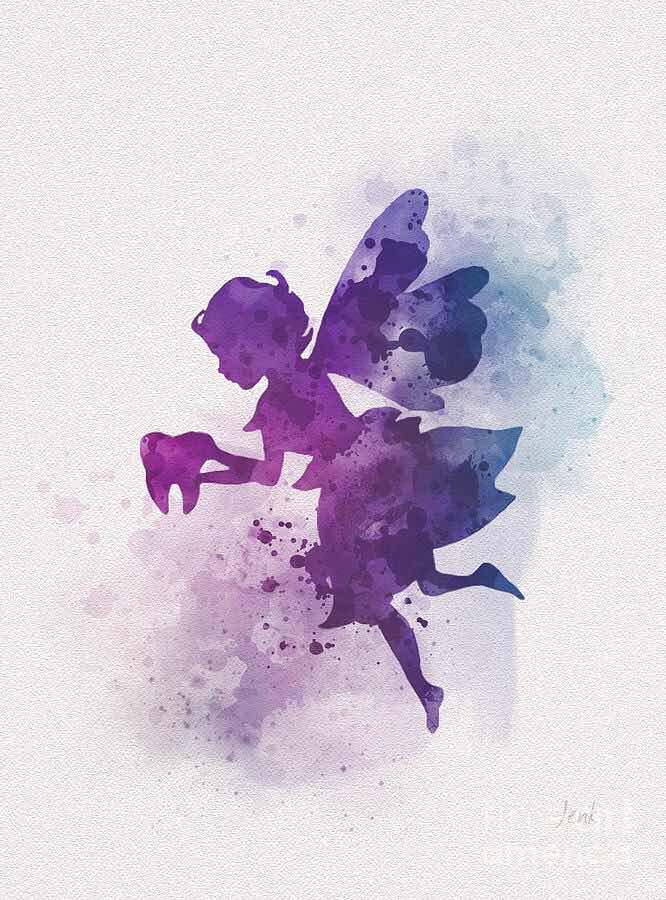
The Tooth Fairy


We saw the comment (below) and even though it was a bit hysterical, we thought about the origin of the tooth fairy, money and pillows…here’s what we learned.


The tooth fairy is famous for exchanging a few dollars for baby teeth that have fallen out. 

The tooth fairy and losing teeth is considered a rite of passage showing that a child is “growing up.” 


There is no direct connection to the tooth fairy in European folklore. 

In Medieval England, it was popular to burn a child’s baby teeth because it was connected to beliefs about the afterlife. 

An old superstition was that if a child did not dispose of his or her baby teeth properly, the person would wander the afterlife for all of eternity in search of them.


There are legends in Europe, however, that do more closely resemble the tooth fairy legend, involving witches.


The purpose for disposing of the teeth is so a witch does not find them.

If a witch found a person’s teeth, it was believed that she might be able to gain complete control over that person.


The Middle Ages

 Europeans in the Middle Ages believed a witch could curse someone by using their teeth, so it was important to dispose of baby teeth the right way. 


Teeth were swallowed, buried, or burned. 

Sometimes baby teeth were even left for rodents to eat. 


Rodents were valued because they had strong teeth.

A tooth fed to a rodent would be the reason for the development of a healthy and strong adult tooth.


Eighteenth Century France

The tooth fairy idea in the 18th century France tells the story of a fairy that changes into a mouse to help a good queen defeat an evil king. 

The mouse secretly hides under the evil king’s pillow and defeats him by knocking out his teeth.


Scandinavian Lore

The tooth fairy leaving money under the pillow for money originated in Scandinavia. 

Vikings paid children for a lost tooth. 

Teeth were worn on necklaces as good luck charms in battle.


While the tooth fairy as children know her today wasn’t popular until the 1900s, the tooth rites of passage have existed in many cultures since the dawn of time.

Sunday, March 2, 2025

Japan’s first-ever Tarot Card Museum in Tokyo


Tarot cards are becoming popular in Japan and that popularity brings us to the brand new Tokyo Tarot Museum that just opened in Tokyo’s Taito Ward. 

Run by Nichiyu, the first Japanese company to sell tarot cards in Japan, it’s the first-ever tarot museum in Japan.


Nichiyu has been importing tarot cards to Japan since 1974 and has continuously been a major part of the industry ever since. 

For the last 20 years, they’ve hosted regular exhibition and sale fairs at bookstores all across the country, but in order to give people even more access and opportunities to explore tarot cars they decided to open a tarot museum.


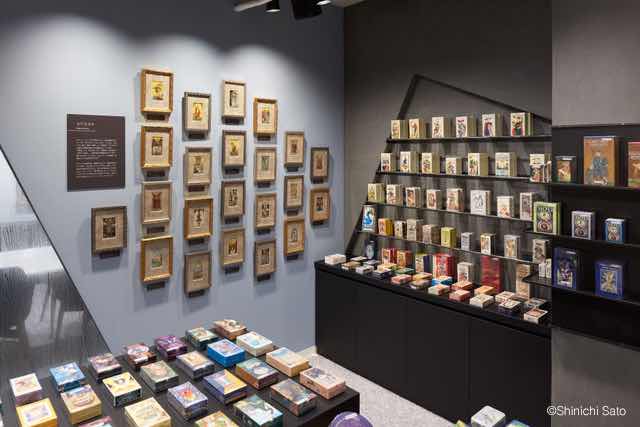
The Tokyo Tarot Museum focuses on exhibiting rare and unusual tarot cards, which were drawn from Nichiyu’s collection of over 3,000 cards. The museum will also put on a continuous display of 500 out-of-print, hard-to-find cards, which will also be for sale.


The museum plans to host workshops and lectures featuring professionals from the tarot world, tarot reading services, tarot card art exhibits, unveilings of new work by artists, 


The Tokyo Tarot Museum is located in the Yanagibashi neighborhood of Tokyo, which has been known as a fortune teller area since the mid-Edo period, and which was once one of Tokyo’s geisha districts. 


The museum is just a few minutes on foot from either JR Asakusabashi or Tokyo Metro Asakusabashi Station, so it’s easy to find. 

It operates on a reservation-only system, so before you go, make sure you book a slot on their website ahead of time. Entrance costs just 500 yen per person.


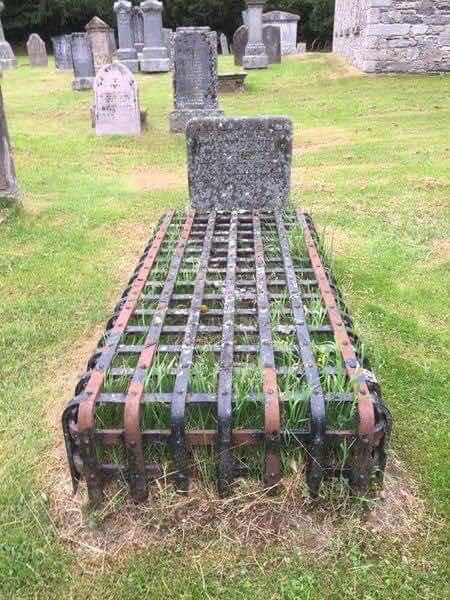
The Grave of Seath Mor Sgorfhiaclach


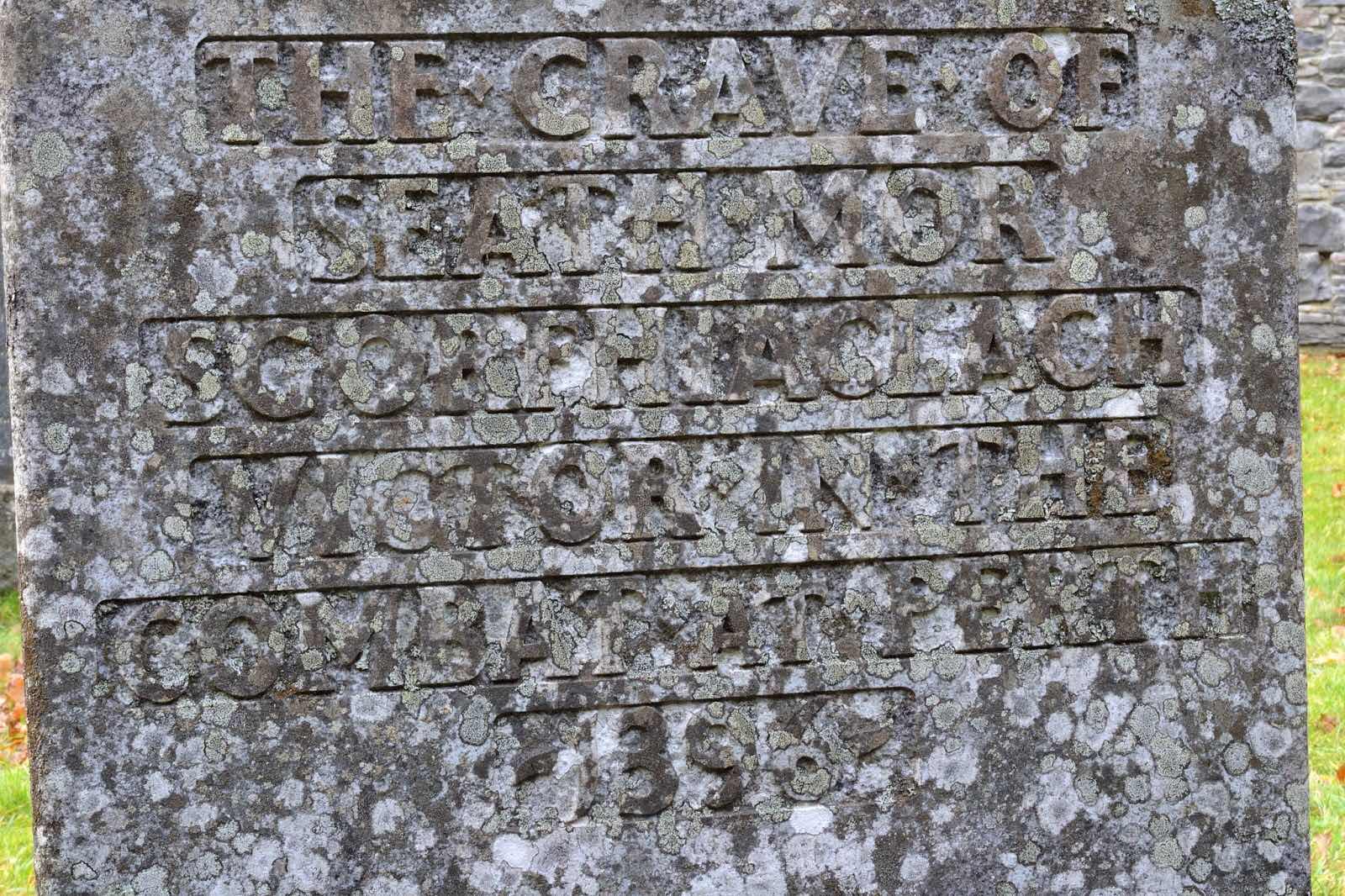
The stone above explains what’s written on the actual stone in the photo below.


Seath Mor Sgorfhiaclach was a 14th century chief of the Clan Shaw.  

The story goes that he was a formidable bad ass warrior, striking terror into the hearts of even his own people. 


The tomb of this warrior lies in a secluded area of the ancient forest of Rothiemurchus. 

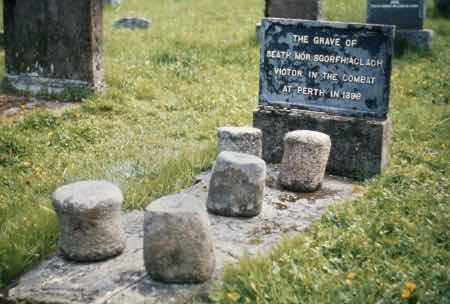
But, apparently he’s been quite busy even in death - Seath has been seen on many occasions by a lot of different people in the area of his tomb, which had five cheese shaped stones lying on top of it.


It seems his spirit appears to travellers  who wander too deep into the forest.

And if that wasn’t enough, he challenges them to do battle. 

People who have survived the altercations say that if you show fear or run away like a coward, you will never be heard from again. However, if you remain calm and accept the challenge, the ghostly chieftain disappears and will leave you in peace. 


It's also advised to keep a safe distance from the tomb due to another entity being present - the guardian spirit of the tomb taking the form of Bodach an Duin - an elf-like spirit who has a terrible temper. 


Remember those five stones atop the tomb - in the 19th century a walker passing the area is said to have thrown one of the circular tomb stones into the River Spey. 

The next day locals found that the stone had been placed back on the tomb, but the walker was found dead in the nearby river. 

The stones on the grave are now beneath a metal cage to deter anyone moving them.


Five "cursed" stones protect the grave and anyone messing around with the stones will be cursed. 

After several cases of illness and death, an iron grate now keeps the stones from being touched.


Saturday, March 1, 2025

Orion Constellation


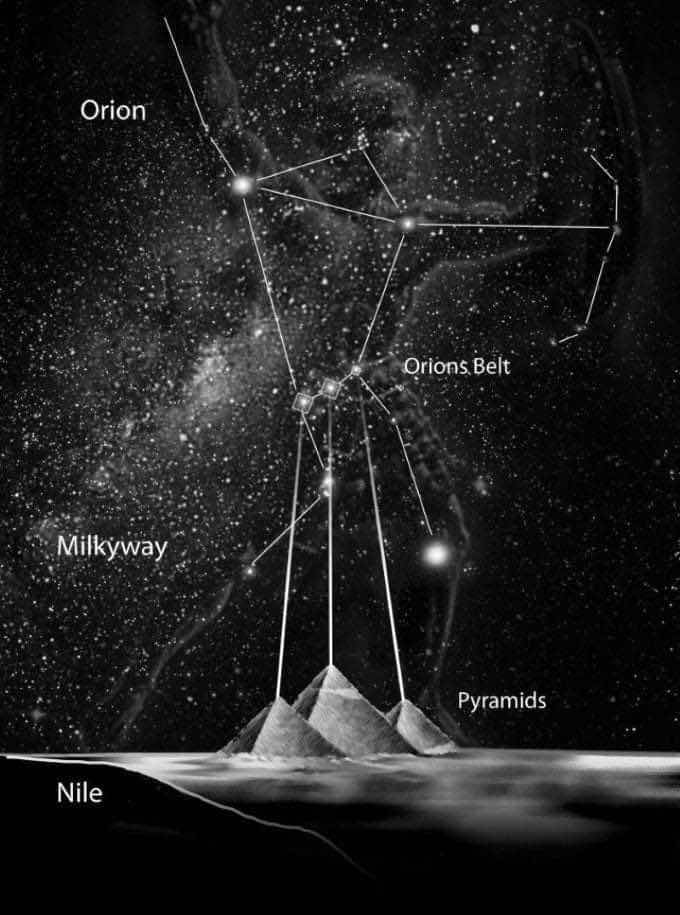
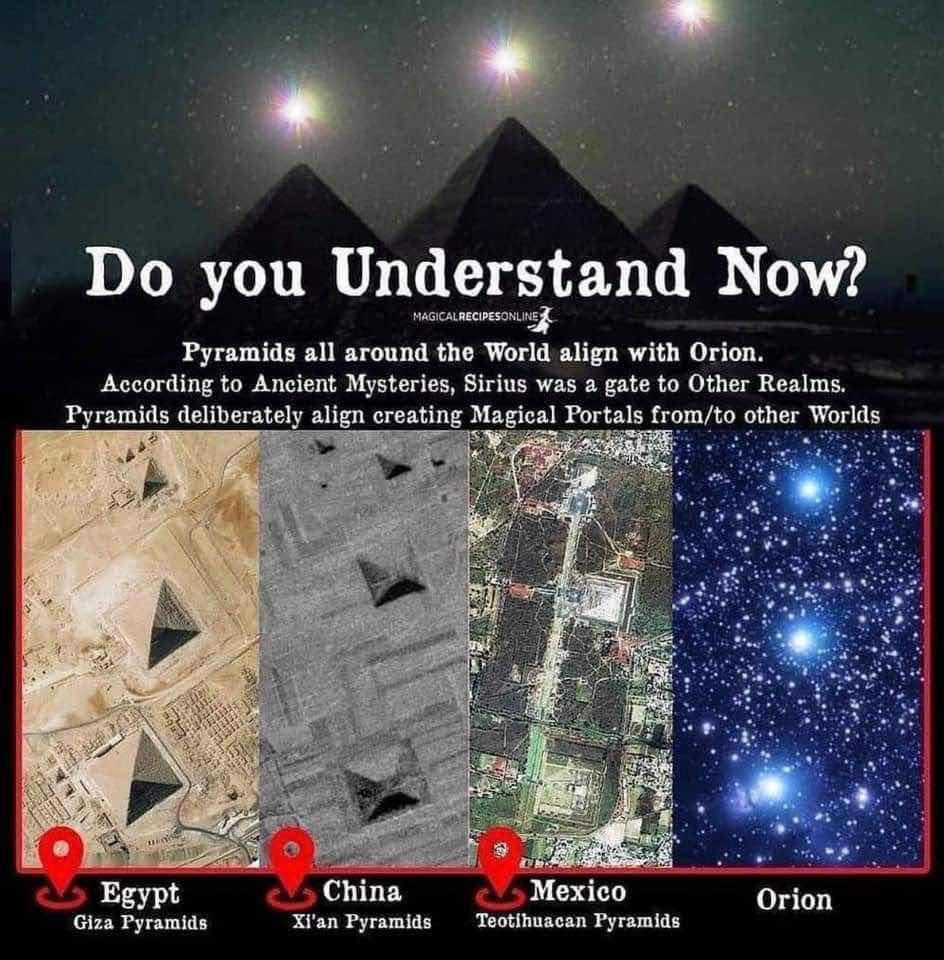
The Orion constellation has been a fixture in monuments throughout the ancient world, from Egypt, China to Mexico.
Orion was an important constellation to our ancestors, but why?


Why are the Pyramids of Egypt placed in such a way that they mirror the Orion pattern?
The whole city of Teotihuacán seems to be aligned astronomically. 

It is consistently oriented 15 to 25 degrees east of true north, and the front wall of the Pyramid of the Sun is exactly perpendicular to the point on the horizon where the sun sets on the equinoxes. 

The rest of the ceremonial buildings were laid out at right angles to the Pyramid of the Sun. 
The Avenue of the Dead points at the setting of the Pleiades.


The Hopi migrated all over the Southwest and after a series of building villages and abandoning these villages, they came to these three primary mesas in Northern Arizona. 
They call them first, second and third mesas. 

The Hopi mesas shape Orion’s Belt image and it is said that the Hopi specifically came here because of the shape, so  we know for sure that the Hopi were extremely interested in Orion’s Belt and for them his was the center of their universe. 

There are those that believe Orion may have been the beginning of our life on earth.
Who knows? 

Maybe it was, maybe not, but aren't we at least curious to understand why the ancient civilizations that ruled the world, gave so much importance to this constellation.
Why did cultures who knew nothing of each other decide to build pyramids aligned with Orion?


Perhaps our curiosity will encourage us to dig deeper looking for evidence to discover answers to the questions about the origin of the human race and the purpose of life altogether.
Or just maybe we can discover what the ancients understood, that we don't.