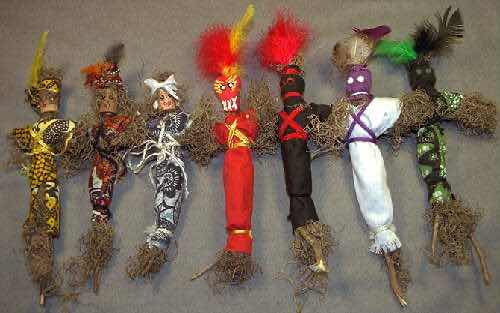
There's more to Voodoo dolls than usually portrayed.
A voodoo doll doesn’t actually symbolize a person in the respect that what happens to it, happens to the person. Instead, a doll is only associated with the person in question—usually by using a photo of the person, or something that was in personal contact with them, like a lock of hair (attaching this personification is actually the purpose of the voodoo straight pin usually seen in a voodoo doll, which is commonly believed to be an instrument of pain).
Other things are usually added to the doll, depending on the intended purpose.
Garlic, flower petals, perfumes, or even money can be added—not as a direct message to the person, but as an appeal to the spirits to open themselves to the doll and the desires of those involved.
The voodoo doll can be used for all kinds of reasons, and most have good intentions.
The voodoo doll itself is neither good or bad but, it reflects those person using it.
Imbolc is a time of celebration, marking the arrival of spring and the awakening of nature. It’s a time to honor the pagan goddess Brigid, who symbolizes the power of fire, healing, and creativity. By celebrating Imbolc, we connect with the natural world and embrace the fertile energy that sustains us.
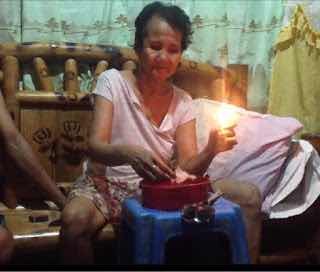
In the Philippines, this folk medicine woman is reading candles, also known as candle wax or candle drip reading.
It's a form of scrying where the candle wax is either dripped or dropped into water where it forms a shape that's interpreted by the Witch.
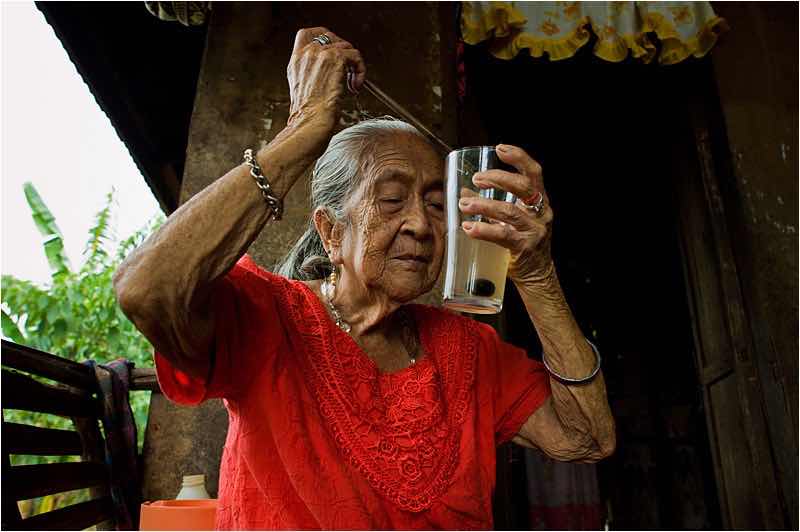
This Filipino medicine woman has been reading candles as a living and is visited by locals for all kinds of reasons - sometimes it's about dwarves and other beings which have been disturbed by people.
The psychic rituals are meant to satisfy the dwarves or whoever, so that they may forgive the human victim and reverse the punishment.
There are several methods practitioners use in TAWAS:
The Egg
A raw egg is cracked into a glass of water and gently shaken, the egg white starts taking on different forms. The egg-
white is examined for any change in shape that might suggest the nature of the illness.
The Paper
A piece of blank paper, about 4- by 4-inch square, whispered with prayers (bulong), is "crossed" over the body of the patients area of affliction then examined for an shadows or shades for clues to determine the cause of the illness.
Cigarette rolling paper
The paper is smudged with coconut oil; then the healer breathes on it while whispering his prayers chosen. The paper is then brought up to a light to "read" the shapes that have formed that will suggest the diagnosis or cause of the condition.
Candles
A piece of candle is heated and melted on a spoon, then placed in water.
The shape taken by the candle on the water will suggest the nature of the medical issue to the healer.
Very often. shapes of dwarfs or elves are seen, and treatments are prescribed.
There is an awareness of Witchcraft and Voodoo in the Philippines that has brought the craft into the mainstream.
Although these practices have been considered taboo since Catholicism was introduced in the 15th century, many Filipino witches are still practicing their ancient customs.
Richard Quezon, the mayor of Siquijor town, the capital of the province, remembers being terrified by stories of evil witches in the mountains that rise from the middle of the island.
“Before, everyone went to healers for things like liver problems or cancer,” he said. “But now, with modern medicine, only those who can’t afford to go to the hospital seek out healers.”
Quezon defends witchcraft. Last month he went to a witch because of a skin condition that wouldn’t go away.
“The medicine from the pharmacy didn’t work, but the herbs and spells from the healer worked right away,” he said. “Some things science can’t explain.”