
Winter Solstice

Thursday, December 18, 2025

The New Moon


What is Wassail Anyway?


“Here we come a-wassailing
Among the leaves so green,
Here we come a-wand’ring
So fair to be seen.
Love and joy come to you,
And to you your wassail, too,
And God bless you, and send you
A Happy New Year,
And God send you a Happy New Year.”

There you go! 
The wassail song we have heard all these years, but does anyone know what it is?

Wassail is a delicious and festive offering for the holidays. 
Wassail is traditionally enjoyed as an integral part of “wassailing”, an ancient English drinking ritual intended to ensure a good cider apple harvest. 
The purpose of wassailing was/is to awaken the cider apple trees, scaring away evil spirits to ensure a good harvest of fruit in the Autumn.

Even though there are many variations of wassail recipes, here’s one we think you’ll enjoy.

WASSAIL RECIPE

Author: Colleen Kennedy

Prep time:  5 mins
Cook time:  30 mins
Total time:  35 mins


This traditional festive holiday drink can be served with or without alcohol so everyone can enjoy it.

Ingredients
  • 4 cups apple cider
  • 1 ½ cups orange juice (no pulp)
  • 6 oz can of pineapple juice
  • 2 TBS fresh lemon juice
  • 3 TBS sugar
  • ¼ cup mulling spices OR to make your own mulling spice by combining 4 sticks of cinnamon, 3 long strips of orange rind, 1 TBS whole cloves and 1 TBS whole allspice berries.

Instructions
  • Combine everything in a large pot; bring to a boil, stirring often. (If you have a metal spice ball, use it, if not, just throw it all in then pour through a strainer prior to serving or storing).
  • Turn off the stove and let it sit for 30 minutes before reheating to serve.
  • Serve it very warm like you would tea.
  • You can make it ahead, refrigerate it and reheat as necessary.
  • Wassail keeps well for 4-5 days.

Wednesday, December 17, 2025

Where’s Santa’s Hat?


Can you find Santa’s Hat?

It’s in there somewhere.

Did you find it?

Don’t scroll to far down, the answer is below.

You can do this, don’t give up yet.

If you found it CONGRATULATIONS.


If not, the answer is below.


Happy New Moon


Merry Christmas, Happy Yule


Tuesday, December 16, 2025

Winter Solstice Pavlova


This Winter Solstice pavlova is a light and refreshing dessert. The pavlova can be made ahead of time and assembled in less than 10 minutes. 

You can dressed it with strawberries, raspberries, blackberries, blueberries, and mint leaves to resemble a wreath.


Pavlova is basically a baked meringue. 

This is a very simple and easy recipe to make.


The timeline for making a pavlova is not long,  most of it is non-active time.

  • Whip meringue - 10 mins
  • Pipe the wreath - 10 mins
  • Bake pavlova - 30 minutes
  • Cool pavlova - 3 hours
  • Assemble - 20 minutes


  • Egg whites - Use large egg whites at room temperature. Room temperature eggs ensure you get a good volume when beating. 
  • Tip - Cold eggs are easier to separate. So separate them when cold, but let them thaw before using.
  • Sugar - Always use fine-grain white sugar when making a pavlova. This will ensure the sugar dissolves properly without leaving any grainy effect. Apart from that, sugar also stabilizes the egg whites helping them build volume and stay puffed up.
  • Cream of tartar - Gives a much creamier egg white and it prevents the separation of protein and water in the whites. It's also flavorless, so it does not affect the flavor of your baked goods. The best substitute for cream of tartar is a pinch of salt, but lemon juice and vinegar are also often used.
  • Cornstarch - Absorbs any excess liquid left in your meringue. As a result, you get a nice crisp outside crust and a soft dry marshmallow on the inside without any weeping.


MERINGUE

  • Preheat the oven to 150 C / 300 F.
  • Note - This temperature will change as soon as you place the pavlova into the oven.
  • Line a baking tray with parchment paper. Using a 7-inch cake pan or bowl as a guide draw a circle on the parchment paper. Flip the paper so the pencil side is down. Set aside until ready to use.
  • In the bowl of a stand mixer, with the whisk attachment - add the egg whites and salt.
  • Whip on medium speed for a minute. Then, gradually add the sugar, one tablespoon at a time.
  • Tip - Adding the sugar slowly prevents the protein from drying out. Adding sugar quickly can cause the meringue to become flat and runny.


  • When all the sugar has been added - continue to whip the meringue until you have stiff peaks.
  • Tip - The meringue should be sticky with stiff peaks but still have a shiny appearance.
  • Switch to a spatula - fold in the vanilla. Then, sift in the cream of tartar and cornstarch.
  • Tip - Cream of tartar helps stabilizes the protein in the meringue and prevents it from separating. The cornstarch absorbs all the excess moisture and gives a crisp meringue.


  • Transfer the meringue to a piping bag with a large round piping tip.
  • Pipe big dollops of meringue on the circle template we created. Make sure to pipe on a baking tray. I pipe large dollops around the circle, then add more dollops in between, and more dollops over those until I have the size I want.
  • Tip - You can make mini pavlovas or meringue kisses with any remaining meringue.
  • Place the pavlovas in the oven on the center rack.
  • Close the oven door and immediately reduce the oven temperature to 130 C / 260 F (DO NOT OPEN THE OVEN DOOR DURING BAKING).
  • Bake for 45 minutes - when the baking time is done do not open the door, let the pavlovas cool inside the oven naturally.
  • Tip - You can leave it in the oven for 2 to 3 hours up to 12 hours.


ASSEMBLE

  • Whip the whipping cream with confectioners sugar. And chop the fruits.
  • Use an offset spatula to gently loosen the pavlova from the parchment paper.
  • Place the pavlovas on a serving platter or cake board.
  • Tip - Once you assemble the wreath, it is too delicate to move around. So, always assemble this on a serving platter. Also, don't assemble too early as the moisture from the whipping cream will make them soft.
  • Pipe the whipped cream on the wreath. Arrange the fruits of your choice, using sliced strawberries, fresh blueberries or whatever you like and mint leaves for garnish.


Winter Solstice Chicken and Dumplings


This recipe for our favorite Winter Solstice creamy Homemade Chicken and Dumplings.

It’s loaded with big fluffy dumplings that are made from scratch in just minutes!


PREP TIME

15 minutes

COOK TIME

35 minutes

TOTAL TIME

50 minutes


INGREDIENTS

  • 6 tablespoons butter
  • 1 cup chopped yellow onion
  • 1 cup matchstick carrots
  • 1 cup diced celery
  • 4 cloves garlic, minced
  • 3 tablespoons all purpose flour
  • 12 oz (1 can) evaporated milk
  • 32 oz (1 quart) chicken stock
  • 4 cups shredded or cubed cooked chicken
  • 1 tablespoon fresh thyme (or 1 teaspoon dried thyme)
  • 2 teaspoons freshly cracked black pepper (or to taste)
  • salt, to taste


HOMEMADE DUMPLINGS:

  • 2 cups all purpose flour
  • 1 tablespoon plus 1 teaspoon, baking powder
  • 1 teaspoon freshly cracked black pepper
  • 1 teaspoon salt
  • 1 tablespoon fresh thyme (or 1 teaspoon dried thyme)
  • 3/4 cup (6 oz) whole milk
  • 4 tablespoons butter, melted


INSTRUCTIONS

  1. In a large heavy bottomed pot (like a dutch oven), melt butter over medium-high heat. 
  2. Add onion, carrots and celery. Cook for 5 minutes, until vegetables being to wilt. Add garlic and cook for 1 minute more.
  3. Add flour and stir to combine. Cook for 1 minute.
  4. Add evaporated milk and chicken stock and quickly stir to combine. 
  5. Bring to a boil and add chicken, thyme, black pepper and salt. Let soup simmer, uncovered, while you make dumplings. 
  6. In a large bowl, whisk together flour, baking powder, pepper, salt and thyme. Make a well in the center of the flour mixture and pour the milk and butter into the center of it. 
  7. Using a wooden spoon (or rubber spatula), stir together until dough ball forms. If your dough seems too dry, you can add an extra tablespoon of milk. 
  8. Using a large** sized cookie scoop, scoop dough and drop directly into the simmering soup. Place them around the pot, not all in the same place. 
  9. Once all dumplings have been added, gently press them down so the soup runs over just the tops of them. 
  10. Place the lid on your pot and lower the heat a little to a low simmer (you don’t want the bottom of the soup to burn but also want the soup to still be simmering to cook the dumplings). 
  11. Cook for 15 minutes, gently stir the soup/dumplings and then cut one dumpling in half to make sure they are cooked through.
  12. If the dumplings are cooked through, serve hot! If not, cook an additional 2-3 minutes and check again. 


Sunday, December 14, 2025

Winter Solstice Traditions


Ancient Pagans


With ancient societies so focused on the sun, it easy to understand why they celebrated when days started getting longer again. 

And if some of the Winter Solstice pagan customs and words (like yule, mistletoe, or decorating your home with greenery) sound familiar, it’s because they were later incorporated into what are now considered Christmas traditions.


Dongzhi Winter Solstice Festival


This ancient Chinese Winter Solstice celebration involves traditions like worshipping the Heaven and ancestors, counting Nines of Winter, and eating rice and dumplings.


Newgrange


Some 400 years before the ancient Egyptians built the pyramids, people in Ireland built Newgrange, a passage tomb designed so that when the sun rises on the day of the Winter Solstice, the chamber is flooded with sunlight.


Soyal


The Indigenous Hopi people of northern Arizona marked the Winter Solstice with a celebration called Soyal. It involved rituals incorporating purification, dancing, gift-giving, and making prayer sticks.


Midwinter


Not all Winter Solstice customs are ancient, including the Midwinter celebrations in Antarctica. On this day, scientists and other residents enjoy special meals, films, and handmade gifts.


Yalda


Also known as “Shab-e Yalda,” this is the ancient Persian Winter Solstice celebration, which still takes place in modern-day Iran. Traditions include eating nuts and pomegranates, and staying up all night in order to see the sunrise.


St. Lucia Day


While the modern Scandinavian holiday marking the beginning of the Christmas season honors St. Lucy, many of the traditions associated with the day — including bonfires, gingersnaps, saffron-flavored buns, and glogg — were passed down from local pagan Winter Solstice traditions. 


Stonehenge


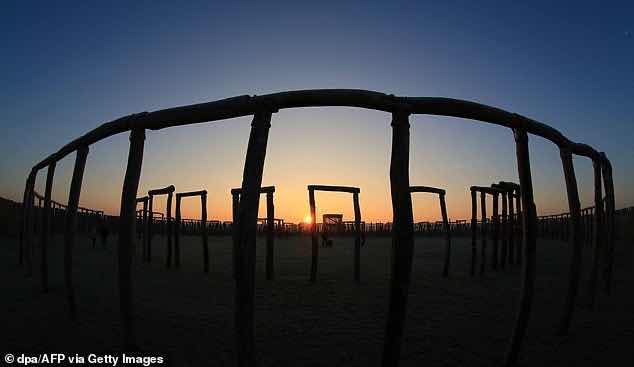
Although Newgrange predates the first phase of Stonehenge by 1000 years, it’s still a pretty ancient Winter Solstice celebration, involving the sun rising through the monument’s iconic stones.


Lantern Festival


Every year, Vancouver’s Secret Lantern Society puts on a Winter Solstice celebration in the form of a Lantern Festival. Those participating make their own lantern, take part in a procession, then watch some fire performances.


Santo Tomas Festival


Each year, Catholics in Chichicastenango (Chichi), Guatemala take part in a weeklong celebration leading up to the Winter Solstice. Incorporating both Mayan and Christian traditions, the festivities include brightly colored clothing, masks, parades, fireworks, and music.


Burning the Clocks


In the days before mechanical clocks, people (roughly) kept the time by observing the sun and moon and were only able to during evening hours with the help of fire. This all comes together in Brighton, England’s annual Burning the Clocks festivalmarking the Winter Solstice, where people dress up like clocks and burn lanterns made of wood or paper.


Illuminations in California


Similar to Newgrange, some of the churches built in California by Spanish missionaries in the late 18th and early 19th centuries were also designed so that the sun illuminates the altar. It was thought to be an attempt to combine Indigenous and Catholic traditions as a way of appealing to (and converting) Indigenous people in an area.


Montol Festival


Another one from England, the Montol Festival is a modern version of ancient Cornish winter traditions, held during the Winter Solstice. Rituals include traditional costumes, music, dancing, and performances.


Toji


In Japan, the Winter Solstice celebration is known as Toji, and features traditions like eating a winter squash called kabocha and taking a hot bath with yuzu citrus fruits.


Chaomos


Each year, the Kalasha or Kalash Kafir people of northern Pakistan celebrate the Winter Solstice with a festival called Chaomos. The weeklong celebration includes traditions like ritual baths, singing and chanting, a torchlight procession, dancing, and bonfires.


Saturnalia


This ancient Roman festival is celebrated similarly to Christmas. It happens around the winter solstice and celebrates the end of the plating season. This festival is filled with feasts and gift-giving. During this time, people are encouraged to show generosity and kindness. It is a weeklong celebration and even courthouses and schools are closed.


Shab-e Yalda


This Iranian holiday happens on the longest night of the year and is meant to celebrate the history of Mithra, a sun God’s triumph over darkness. Shab-e Yalda translates to “Night of Birth”. People partake by burning fires and doing good deeds, which are meant to ward away evil spirits. Yummy foods are also included like nuts and pomegranates. It’s a night of poetry readings and some stay up all night, cautious of intruding evil spirits and wait for the morning. 

Saturday, December 13, 2025

Christmas - That Pagan Hoilday


Because of its known pagan origin, Christmas was banned by the Puritans and its observance was illegal in Massachusetts between 1659 and 1681.  But somehow, Christmas was and still is celebrated by most Christians.

And even though the Christmas tree is Pagan, there seems to be some confusion.


The Many Faces of Santa Claus


Santa Claus will soon be coming to town, bringing gifts to children everywhere.

Santa has several names, depending on the part of the world you live in. 

The English call him Father Christmas, the French know him as Père Noël, and Kris Kringle seems be a version of the Christkind, or Christ Child, who leaves treats for good German Lutherans.


In the Netherlands, he arrives in town on a steamboat or horse from Spain. On the night of Dec. 5, Dutch children put their shoes on the hearth – these days near the central heating duct – hoping that he will fill them with sweet rewards rather than a reprimand for poor behavior. 

The Dutch call him Sinterklaas – which has come into American English as ‘Santa Claus’ – short for Sint Nicolaas or St. Nicholas .

St. Nicholas and Santa Claus are historically the same man. 

But unlike the jolly figure who purportedly flies on a sleigh from the North Pole, the saint came originally from the balmy Mediterranean coast.


Hope that clears everything up.


Friday, December 12, 2025

Funnel Cakes


Funnel cakes made their first appearance in Anglo-Norman medieval cooking manuscripts under the name “mincebek” or sometimes “mistembec” or “cryspes.” 

These words come from France; the French phrase “mis en bec” means “put in spout,” which relates to the way funnel cakes are made.

In the beginning, funnel cakes, or fritters, were made by pouring yeast or sourdough batter into a bowl with a tiny hole in the bottom. 

The finished cakes were sprinkled with salt and served with syrup.

During the 19th century, funnel cakes were sold as a novelty during Christmas and New Year’s, mostly at church fairs and holiday markets.


The Tradition of Mistletoe at Christmas


Mistletoe is a plant that grows on an assortment of trees including willow, apple and oak trees

The tradition of hanging it in the house dates back to the times of the ancient Druids


It is supposed to possess mystical powers which bring good luck to the household and wards off evil spirits. 

It was also used as a sign of love and friendship in Norse mythology.


When the first Christians came to Western Europe, some tried to ban the use of Mistletoe as a decoration in Churches, but many ignored the ban and continued to use it! 


York Minster Church in the UK used to hold a special Mistletoe Service in the winter, where mistletoe users in the city of York could come and be pardoned.


The custom of kissing under Mistletoe comes from England. 

The earliest recorded date mentioning kissing under the mistletoe is in 1784 in a musical. 


There was kissing under the mistletoe in the illustrations in the first book version of 'A Christmas Carol' published in 1843, and this might have helped the idea of kissing under the mistletoe. 


The original custom was that a berry was picked from the sprig of Mistletoe before the person could be kissed and when all the berries had gone, there could be no more kissing.


The name mistletoe comes from two Anglo Saxon words 'Mistel' (which means dung) and 'tan' (which means) twig or stick! So you could translate Mistletoe as 'poo on a stick'.