Summer Solstice

Monday, May 25, 2026

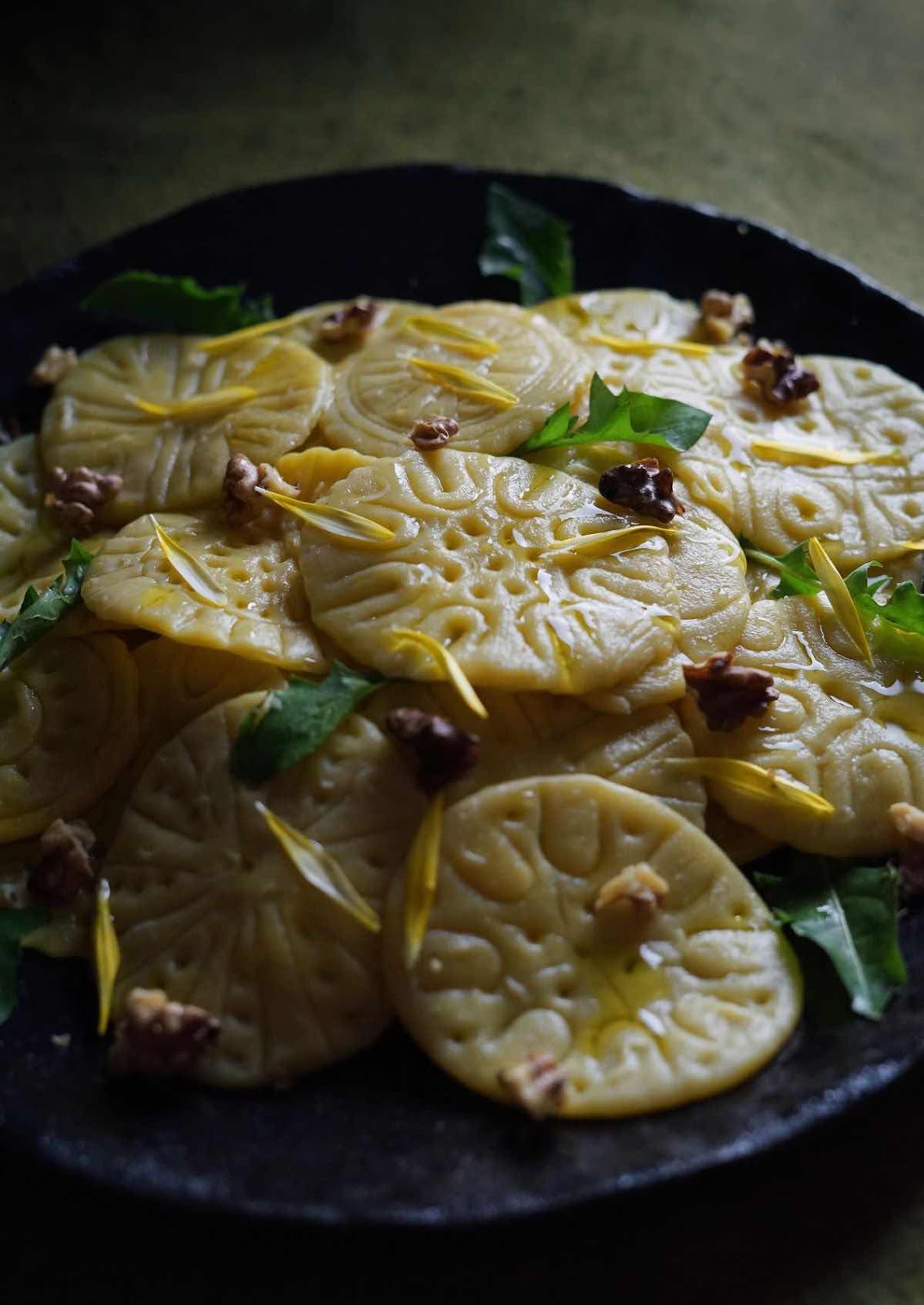
Sun Medallion Pasta with Walnut and Dandelion To Honor The Solstice Sun


For ancient cultures all over the world, the energy of the Summer Solstice was celebrated through ceremonies honoring the sun on the longest day of the year. 

Some communities in Europe would gather together and feast, then light a wheel on fire and roll it down a hill to represent the waning pattern of the sun over the coming months. 


And what would a celebration be without some delicious foods? 

Common in many cultures are round cakes or breads with a cross cut into the top baked in honor of the sun. These “sun breads” in Nordic countries were baked with honey and were believed to bring fertility and abundance to the fields and the people. 


Some old recipes even called for the addition of midsummer dew to impart magical healing powers to the bread. 

So, let’s honor the sun in a similar way, pulling on another ancient culinary tradition: that of beautiful stamped pastas called “corzetti” from Italy’s northwestern region of Liguria. 


These medallions are both beautiful and delicious. 

The dough is flavored with white wine and sometimes perfumed with herbs, which release a beautiful fragrance as the pasta cooks. 

What a perfect jumping-off point for a hearty midsummer meal!


While corzetti are usually prepared with special wooden molds designed just for making them, it’s pretty easy to create beautiful designs using tools you have around your kitchen - pastry cutters, pastry tips, chopsticks, and even dried pasta shapes used as a stamp. 

This way you can make plenty of varied designs and interpretations of sun wheels, and even let younger family members design their own works of art. 


Walnut Pesto: 

1/3 c. raw walnuts

1 garlic clove 

2 c. wild greens and herbs - basil and dandelion leaves are wonderful, as well as sage

1 1/2 Tbs. lemon juice

1/4 c. olive oil

1/4 c. grated parmesan cheese

sea salt to taste

  1. Toast walnuts in a hot cast iron pan until fragrant and lightly browned. Let cool. (Be sure to make a few extra for plating your pasta!)
  2. Meanwhile, grate the garlic clove into a small dish and top with the lemon juice to sit for a couple of minutes. 
  3. While the walnuts are cooling,  add the herbs to a blender or food processor and blend until the leaves have broken up. Then, add the lemon juice and olive oil and blend until it becomes a paste.
  4. Add the  parmesan, toasted walnuts, and sea salt to the food processor. Pulse until the mixture is blended and the nuts are broken into the size of small breadcrumbs. Refrigerate pesto until ready for use. 

Corzetti Pasta: 

1 1/2 c. all-purpose flour

3 egg yolks

1/3 c. white wine

1 Tbs. oil

1 pinch salt

1/4 c. dandelion petals

  1. In a high speed blender, combine the dandelion petals, white wine, and oil and blend until very smooth. 
  2. Sift the flour and salt into a bowl, then make a well in the center and add the rest of the ingredients. Whisk the mixture, gradually incorporating the flour into it. You should have a nice stiff dough. If the dough is crumbly, add a bit more wine to bring it together. Knead for about 10 minutes, or until the dough is smooth and elastic. Cover in plastic wrap and let rest for 30 minutes. 
  3. Using a pasta roller or a floured rolling pin, roll the dough out to 1 mm thick. 
  4. Cover the dough with plastic wrap and unroll a little at the time to keep the rest of it moist while you work. Emboss designs into it with various kitchen tools and utensils, then cut them out with a round pastry cutter. Place finished medallions on a clean kitchen towel - it’s okay if they dry out a bit while you finish the rest. 
  5. Bring a large pot of salted water to a boil. Cook the corzetti in the boiling water until al dente (about 4 minutes.) Drain and toss with a bit of olive oil.

To serve: 

1/4 c. fresh whole walnuts, toasted

1 avocado, sliced into thin slices

Pesto

Cooked corzetti, hot

fresh greens and/or dandelion petals, if desired

lemon slices

1. Place a small scoop of pesto into a shallow bowl. Top with the pasta medallions, toasted walnuts, and avocado slices. Garnish with fresh greens and dandelion petals and serve with a bit of lemon on the side.

Our Cats

 4 of our 9 cats found something very interesting outside.


Sunday, May 24, 2026

The 4 Thieves and the Plague


While there may not be one exact version of the story, there is one thing certain, the Bubonic Plague was a killing machine.
But during the plague four thieves went from house to house to rob those who had died from the illness, but they remained healthy.
After the thieves were captured and tried for the robberies, a judge offered to make a deal if they would explain how they were able to be around the sick but not be affected by the illness. 


If you look at the photo above, with the bird looking creature, it's interesting, that during the time of the plague in Europe, physicians wore long black robes, wide brimmed hats, and masks that appeared to have a beak. 
The reason for doing this is that the masks contained a combination of herbs, spices, and essential oils that the physicians would breathe in order to keep themselves safe from those infected.
While there are a few versions of the story they all center around one event, the Bubonic Plague.

So what did the thieves do to avoid the plague and what were the herbs, spices, and essential oils used in the masks of the physicians?

What we do know is that the powerful combination of clove, lemon, cinnamon bark, eucalyptus, and rosemary has been found to be strong enough to reduce bacterial cultures by 99.96%.


Antimicrobial properties
  • 2017 studyTrusted Source found that low concentrations of cinnamon and clove oil had high antimicrobial activity against persistent cultures of Borrelia burgdorferi, the causative agent of Lyme disease.
  • 2018 studyTrusted Source found that vapors of cinnamon oil inhibited the growth of respiratory pathogens like Haemophilus influenzae and Streptococcus pneumoniae in a petri dish. But eucalyptus oil had little activity.
  • 2012 studyTrusted Source showed that eucalyptus oil had antimicrobial activity against two types of bacteria that can cause disease in humans: Escherichia coli (E. coli) and Staphylococcus aureus (skin infections).
  • Overall, fewer studies have been performed on lemon oil. But twoTrusted SourcestudiesTrusted Source from 2019 observed that it has some antimicrobial properties.
Here are some ways you can use thieves oil in your day-to-day life.

Diffusion
A diffuser is a device that allows the scent of essential oils to disperse throughout a room. Typically the oils are placed in the diffuser along with water. Diffusion can be good for things like:
  • providing ambiance to a room
  • promoting alertness
  • elevating mood
  • reducing feelings of stress or anxiety
To use thieves oil for diffusion, carefully follow the product instructions that came with your diffuser. This is important, because the directions may vary by product.

Steam inhalation
Steam inhalation involves adding essential oils to a bowl of steaming water. The hot water vaporizes the oil, allowing it to be inhaled with the steam. This application may help with respiratory congestion or sinus issues.
To use thieves oil for steam inhalation, you can do the following:
  1. Add several drops of thieves oil to steaming water. You may want to start with just a couple drops so the scent isn’t overwhelming.
  2. Place a towel over your head and lean over the bowl of water.
  3. Keeping your eyes closed, breathe in deeply through your nose.

Massage
You can also make massage oils using essential oils. To do this, the thieves oil must be diluted in another type of oil, which is called a carrier oil. Carrier oils can include things like jojoba oil and coconut oil. Don’t apply essential oils directly on the skin unless diluted in a carrier oil.
The University of Minnesota Center for Spirituality and Healing recommends that the total percentage of essential oil shouldn’t exceed 3 to 5 percent of the total solution volume.
If you’re planning on applying massage oil to a large area, consider using a 1 percent solution.

Lotions and creams
You can also add thieves oil to unscented lotions and creams. These preparations can then be used for purposes such as soothing, cleansing, or helping with wound healing.
Like with massage oils, you’ll need to dilute thieves oil in the cream or lotion before applying it to your skin.
The National Association for Holistic Aromatherapy recommends that the final essential oil concentration be 1 to 2.5 percent for normal skin and 0.5 to 1 percent for sensitive skin.

Spray application
You can also use thieves oil in a spray. You may find this helpful for enhancing the scent of a room. Or you may want to tap into the antimicrobial properties of thieves oil and use it as a mild cleanser.
To use thieves oil in a spray:
  1. Add 10 to 15 drops of thieves oil per ounce of water used.
  2. Optional: Add a dispersing agent, such as solubol, to the solution. This helps the oil diffuse better in the water.
  3. Shake well and spray. You’ll need to shake it every time before you spray.


Herbs in the Garden and Bugs


Herbs that planted near the home or in the garden keep away bugs.

Bay leaves: Repel flies. When you grow this plant, you won’t have to rely on the dried leaves from stores to add flavor to roasts and soups. Just pick the leaves as you need them.

Chives: Repel carrot flies, Japanese beetle and aphids.

Dill: Repels aphids, squash bugs, spider mites, cabbage loopers and tomato hornworms.

Fennel: Repels aphids, slugs and snails.

Lemon balm: Repels mosquitoes.

Oregano: Repels many pests and will provide ground cover and humidity for peppers.

Parsley: Repels asparagus beetles.

Thyme: Repels whiteflies, cabbage loopers, cabbage maggots, corn earworms, whiteflies, tomato hornworms and small whites.