Thursday, January 2, 2025
Tuesday, December 31, 2024
Hello January

Where did the name January come from?
What does January mean?
January, as we know, is the first month of the year and contains 31 days.
The term originated before the year 1000 from Middle English, ultimately deriving from the Latin noun use of Jānuārius, equivalent to Jānu(s) or Jānus.
Who was Janus?
In ancient Roman culture, Jānus was a god of doorways, beginnings, and the rising and setting of the sun.
His name comes from the Latin jānus, meaning “doorway, archway, arcade.”

Here’s an interesting fact: the closely related Latin word jānua, meaning “door, doorway, entrance,” ultimately gives us the word janitor, which originally referred to a door attendant or porter before evolving to its more familiar idea of “custodian.”

Monday, December 30, 2024

Saturday, December 28, 2024
Braided Imbolc Bread
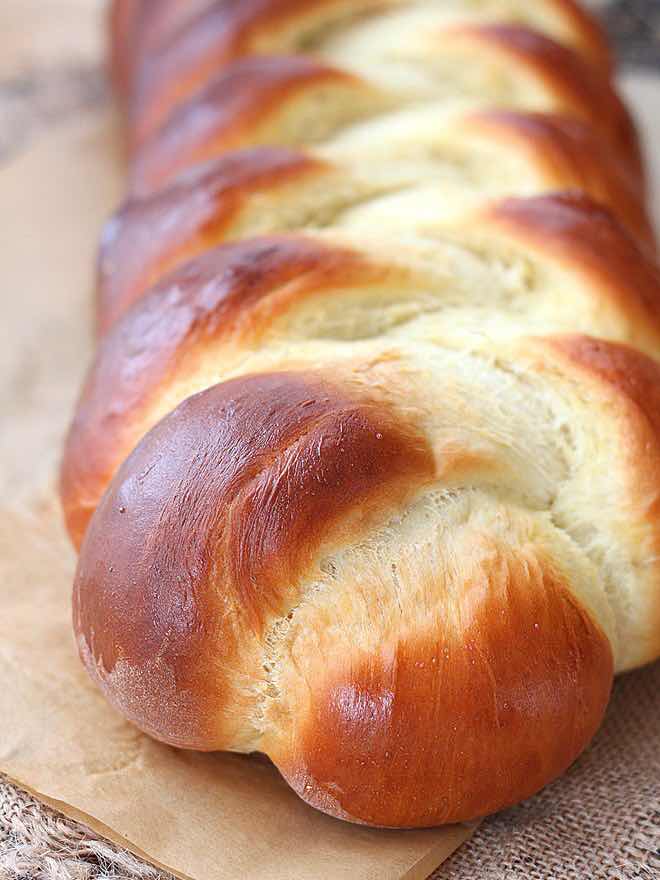
Pillow-y soft, tender and delicate, enriched with both eggs and butter this braided egg bread is so easy to make.
Perfect for Imbolc and for french toast or bread pudding.
Grains are associated with Saint Brigid, as well as the goddess Brigid.
Therefore, you may choose to make any kind of bread you'd like for Imbolc.
Try baking this braided Brigid bread.
If you've made bread before at home by hand, it's not too difficult to split the dough in three parts and braid it as you would braiding hair.
While you knead, roll, and braid the dough, give thanks to the Celtic ancestors, our beloved house elves, and to Brigid for peace, health, and abundance in the coming Spring.
- 4 cups (480 grams) bread flour
- 2 teaspoons active dry yeast
- 2 tablespons sugar
- 1/2 cup water
- 1/2 cup milk
- 2 tablespoons butter, diced
- 2 teaspoons salt
- 3 eggs, lightly beaten
- Topping
- 1 egg yolked mixed with few drops of milk
- *more flour for dusting the working area
Instructions
- In a mixing bowl add 2 cups of flour, sugar and yeast. With a hand whisk or a fork, stir to combine.
- In a small saucepan, add the water, milk and butter and heat over low flame until lukewarm (~ 110F).
- Slowly pour over the flour mixture, stir to combine and let it rest for about 10-15 minutes until the sticky dough starts to rise and gets a spongy texture.
- Attached the dough hook to your mixer. With the mixer on low speed, start mixing the sticky dough, slowly beating the lightly beaten eggs in. Stir in the salt and slowly adding the remaining 2 cups of bread flour.
- When all the flour is added, increase the mixer speed to medium-low and let it knead for about 5-6 minutes or until the dough cleans itself from the sides of the bowl.
- If it's still sticky add just a little bit more flour. The dough should be soft and elastic.
- With greased hands, remove the dough from he mixing bowl and it into a buttered bowl, cover with plastic wrap and let it rise at room temperature until doubled in volume. It should take little over an hour.
- When the dough is risen, place it on a lightly floured surface, divide into 3 and roll each piece into a 15-inch rope.
- Braid the ropes, pinching the ends and tuck them under to seal.
- Gently place the braid on a baking sheet. If it's easier for you, you can braid it directly on the baking sheet.
- Cover with plastic wrap again and let it rest for the second time for about half an hour.
- Meanwhile, heat the oven to 400F.
- Just before placing the bread into the oven, brush it with the egg wash (1 egg yolked mixed with few drops of milk).
- Bake for 30 minutes or until nice and golden.
- Let it cool before slicing.
Subscribe to:
Posts (Atom)